

 Addison Wilson

The seven types of social proof SaaS buyers look for
The types of social proof that SaaS teams use fall into seven groups. They differ in who controls them: the vendor picks its logos and testimonials, while review sites and communities hold proof the vendor cannot edit, and buyers know the difference.

- Customer reviews and ratings. Users write them, a review site such as G2, Capterra or Trustpilot publishes them, and the star rating sums them up.
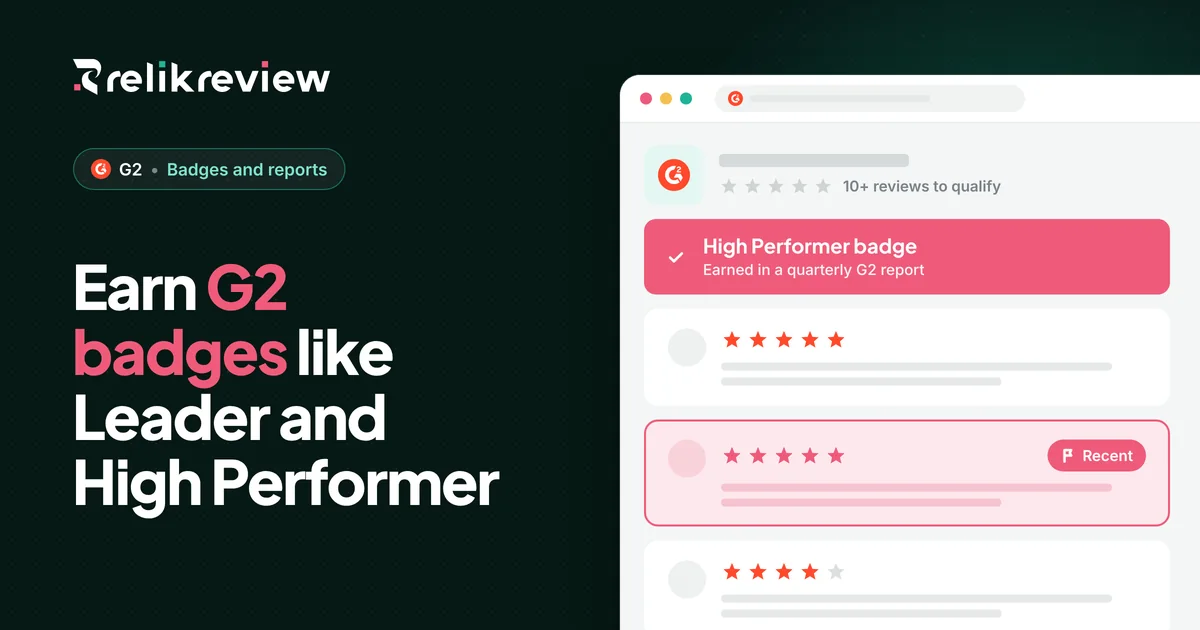
- Review site badges. Report badges turn review data into a short signal, and our guide to G2 badges explains how each one is earned.
- Customer logos. A logo row tells a new visitor that companies like theirs already use the product.
- Case studies. One customer's problem, rollout and result, told in depth.
- Testimonials. Short quotes the vendor collects itself, more believable with a real name, photo and job title.
- Usage numbers. Figures such as active teams or uptime, which show scale as long as they are current and accurate.
- Community and social mentions. Users talking about the product on LinkedIn, Reddit, YouTube or in a product community, without being asked.
The first two come from outside the company, which is why buyers lean on them most. The others still matter, because each answers a question that reviews leave open, such as whether a company of a given size has made the product work.
Why customer reviews as social proof carry the most weight
Customer reviews as social proof sit apart from the other types because the vendor does not write them, choose them or decide where they appear. Research on software buyers keeps putting them near the top of the sources that shape a decision.
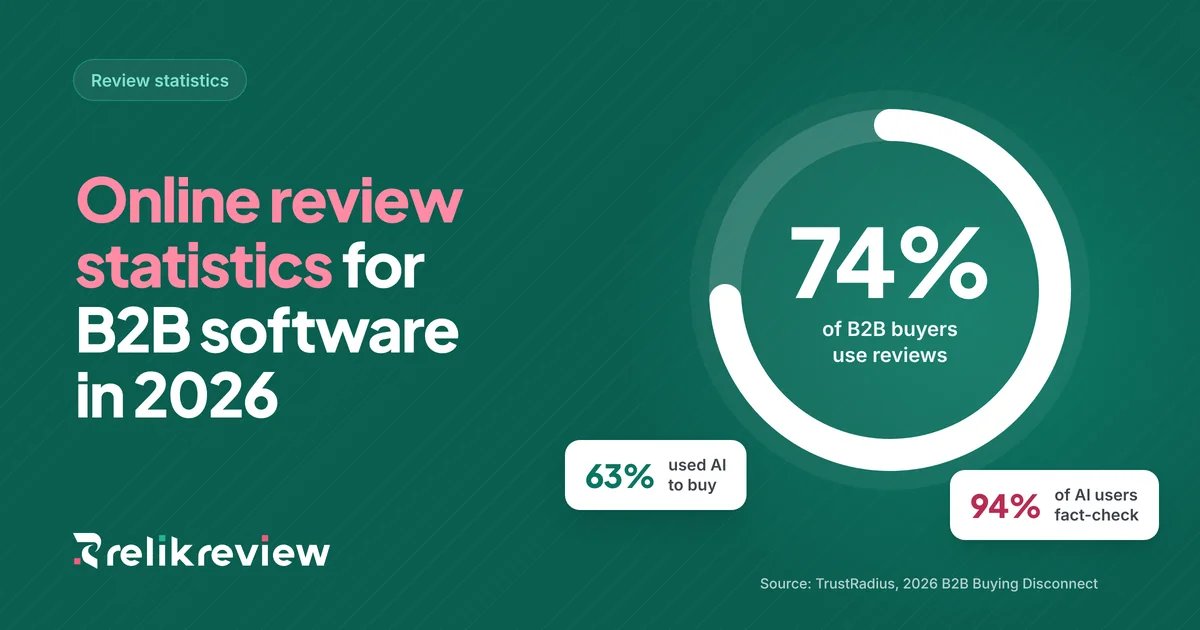
TrustRadius's 2026 B2B Buying Disconnect Report, based on a January 2026 survey of 1,862 technology buyers, found that 74% of buyers use reviews to inform their purchase decisions. Analyst reports, by contrast, were used by only 13% of buyers, a 63% decrease since 2022. G2's 2026 Buyer Behavior Report, based on more than 1,000 B2B software buyers and decision makers, found that review sites (38%) were the top source shaping which vendors make a buyer's shortlist.

Volume and rating both matter. Spiegel Research Center's study of how online reviews influence sales, first published in 2017, found that the purchase likelihood for a product with five reviews was 270% greater than for a product with no reviews, and that purchase likelihood typically peaks at ratings between 4.0 and 4.7. The study looked at product reviews in general, so read it as a direction for software: the first handful of reviews changes behavior, and a perfect 5.0 is not the goal.
Teams with a thin profile often start here. Some purchase G2 reviews or collect real Trustpilot reviews through a managed campaign with verified users, and others begin by buying SoftwareSuggest reviews for a directory their buyers also check. The reviewers are never paid and choose their own rating, and our SaaS review services page compares every platform we cover.
Keeping social proof for SaaS honest and compliant
Every type of social proof rests on one idea: it has to reflect real experiences, and it must never mislead. The FTC turns that idea into specific rules, and the review sites add their own terms on top.
What the FTC expects
The Endorsement Guides Q&A says that when an ad features a customer whose results are better than most people will get, and the advertiser cannot show they are typical, the ad must make clear what the generally expected results are. Any connection between the endorser and the company, such as payment, a free product or an employee relationship, should be disclosed clearly and conspicuously.
The same Q&A warns that sorting reviews so the five-star ones appear first can mislead even if visitors can re-sort them. Asking for reviews only from customers you expect to be happy is misleading too if it substantially skews the reviews.
What the 2024 rule bans
The FTC's Rule on the Use of Consumer Reviews and Testimonials, 16 CFR Part 465, took effect on 21 October 2024. It covers testimonials and social media metrics as well as reviews:
- Fake reviews and testimonials that misrepresent that the person exists or used the product (465.2).
- Conditional incentives given for reviews that express a particular sentiment, positive or negative (465.4).
- Insider reviews by officers or managers without a clear disclosure of the relationship (465.5).
- Review suppression, such as implying the reviews shown are all of them while hiding negative ones (465.7).
- Fake social media indicators, such as bought followers, views or likes used to misrepresent influence (465.8).
The last item matters for community proof. A follower count or a view count is social proof too, and the rule covers fake ones alongside fake reviews.

What the review sites allow
Badges and review quotes are licensed content, so the review site's terms decide how you use them. G2's Community Guidelines let any vendor show its star rating with a backlink to its G2 profile and the line "Source: G2.com, Inc." Users Love Us badges are free with a backlink to the G2 category page, while other report badges need a Starter plan or above, the full badge name and the same backlink.
G2 bans altering any badge, and republishing a review needs a Professional plan or above, a backlink to the review and the customer's opt-in. Logos and testimonials sit outside any review site's rules, so get written permission from each customer and keep it on file with the date.
Want reviews that hold up under every one of these rules?
See how our review campaigns work, with verified reviewers who are never paid and choose their own rating.
How to measure the effect of social proof
Social proof is easy to add and hard to judge by eye, so measure it like any other change to a page. The aim is to learn whether one piece of proof changes what buyers do at one step.

Start with one page and one metric, such as pricing page visits that become trial starts. Run an A/B test where half of the visitors see the proof and half do not, change nothing else, and let it run until both versions have enough visitors for the difference to mean something.
Some effects never show up on one page, because buyers meet reviews and peer advice before they reach your site. Add a "what helped you decide?" question to the signup or demo form, ask sales to note in the CRM when a buyer mentions a review or case study, and track visits from your review profiles. Our roundup of online review statistics collects recent research to compare your results against.
FAQs about social proof
What are the main types of social proof?
The main types of social proof for software are customer reviews and ratings, review site badges, customer logos, case studies, testimonials, usage numbers and community or social mentions. Reviews and badges come from independent sites, while logos, case studies and testimonials are chosen by the vendor, and buyers know which is which.
Which type of social proof works best for B2B software?
Customer reviews on independent sites work best for most B2B software, because buyers use them to build shortlists. G2's 2026 Buyer Behavior Report found review sites were the top source shaping shortlists, at 38%. Case studies then help later in the deal, when a buyer has to justify the choice to colleagues.
Is it legal to use customer testimonials in marketing?
Yes, it is legal to use customer testimonials in marketing when they reflect real experiences. The FTC expects you to disclose any connection, such as a discount or free plan given to the customer, and to show generally expected results when a testimonial describes unusual ones. Its 2024 rule bans fake testimonials outright.
Can you show G2 badges on your website?
Yes, you can show G2 badges on your website within G2's rules. Users Love Us badges are free with a backlink to the G2 category page, while other report badges need a Starter plan or above, the full badge name and the same backlink. G2 also bans altering any badge in any way.
How do you measure the impact of social proof?
To measure the impact of social proof, test one type on one page against one metric, such as trial starts, with half of visitors seeing it and half not. Then add a "what helped you decide?" question to signup or demo forms, and ask sales to log when buyers mention reviews or case studies.