

 Addison Wilson

What a customer review program includes
A customer review program is a repeatable process for collecting reviews on the sites your buyers read. It sets goals and platforms, names one owner, asks every customer at fixed points, paces requests to a monthly target, replies to each review and reports results, all inside each platform's rules and the FTC's.
The difference between a program and occasional asking is ownership and rhythm. Occasional asking tends to follow a big release or a board meeting, then fades, and the profile goes quiet for months. A program keeps running when people are busy, because the dates, wording and targets are written down, and each part sets up the next.

Set goals and choose platforms first
Start with what the reviews are for, because the goal decides the site. A B2B team losing deals at the shortlist stage needs reviews where buyers compare vendors, while a self-serve app needs a profile that looks active when someone searches the brand.
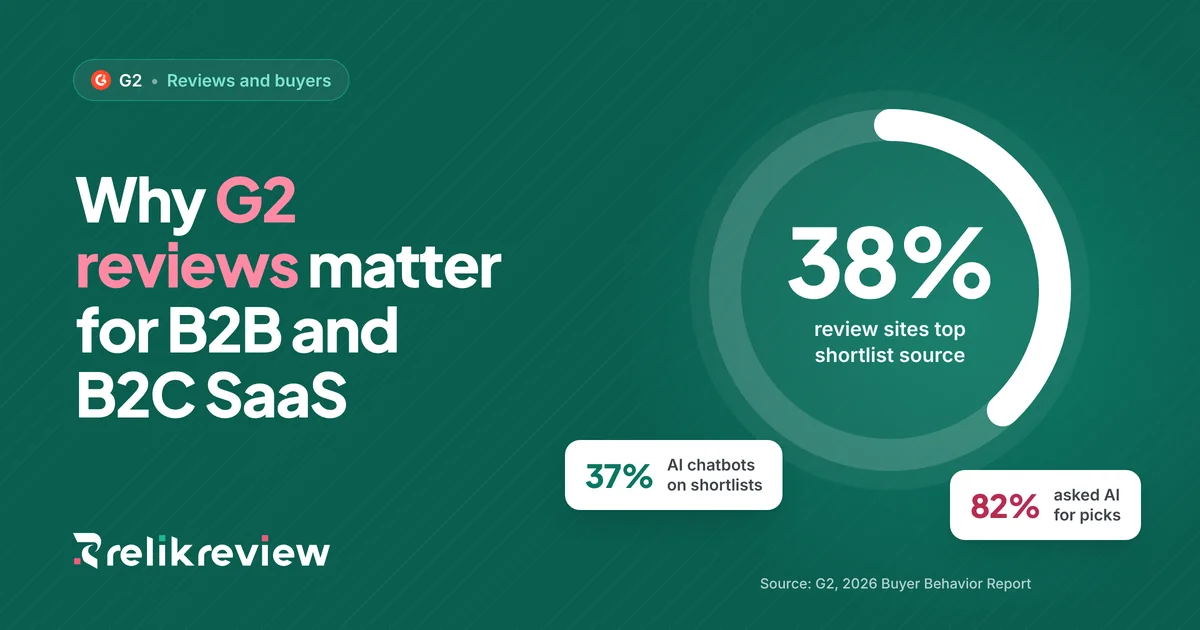
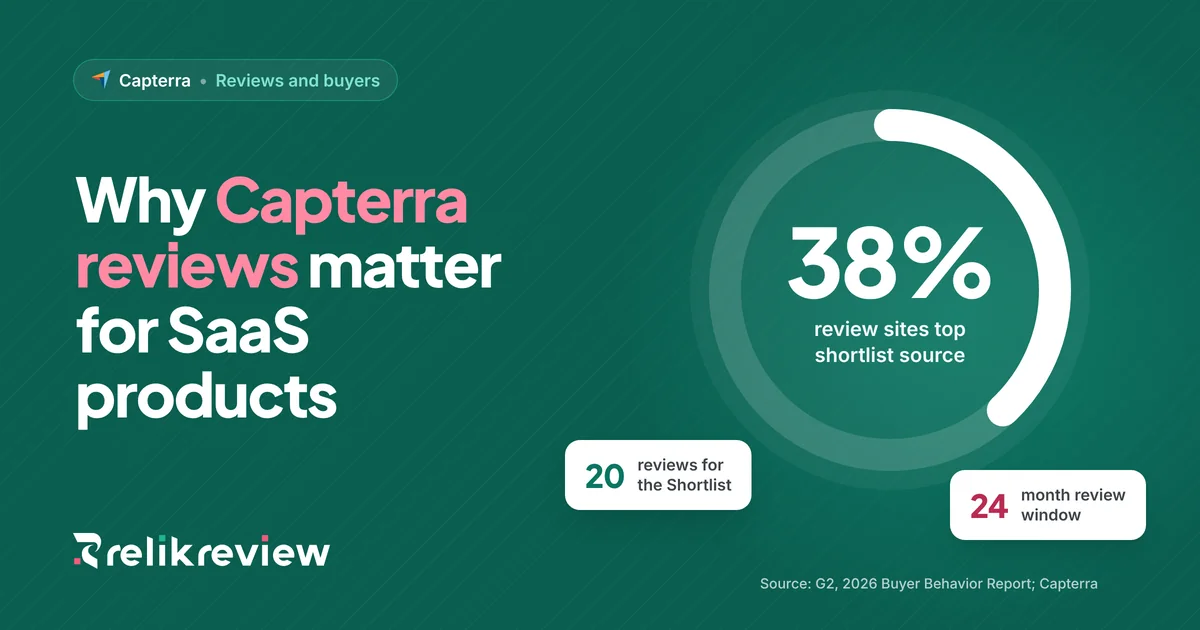
Review sites carry real weight at the shortlist stage. In G2's 2026 Buyer Behavior Report, review sites (38%) were the top source shaping which vendors make a buyer's shortlist, ahead of AI chatbots at 37%, in a survey of more than 1,000 B2B software buyers and decision makers.
| Goal | Start with | Track each month |
|---|---|---|
| Win more B2B shortlists | G2 or Capterra | New reviews and category position |
| Convert self-serve sign-ups | Trustpilot | New reviews and TrustScore |
| Win installs from HubSpot customers | HubSpot App Marketplace listing | New reviews on the listing |
| Reach developers and IT buyers | SourceForge or SoftwareSuggest | New reviews |
Pick one main site and at most one second site for the first two quarters. Most B2B teams start with G2 or Capterra, and our posts on why G2 reviews matter and why Capterra reviews matter explain what each one does for a shortlist. Spreading the first year across six sites leaves every profile thin.
If you would rather not build it, we run the program for you on six platforms. Teams that buy software reviews from RelikReview can start with our G2 review service or purchase Trustpilot reviews from verified users, while HubSpot app marketplace reviews come from their own clients through HubSpot's review link. In every campaign, reviewers are never paid and choose their own rating.
Give the program one owner
A review program without an owner stops in the first busy month. Give it to one person, usually in customer marketing, product marketing or customer success operations, and make the monthly target part of their goals.
The owner runs the system without sending every request personally. They keep the asking points firing, update the wording, check the rules before a new channel goes live and share the report. Other teams help at set points:
- Customer success adds the review ask to regular account check-ins.
- Support sends the follow-up after every resolved ticket.
- Product places the in-app message and keeps it working after releases.
- Leadership reads the monthly report and decides on budget.
Write the owner's job down in a one-page brief. Name the sites, asking points, wording, target and who covers during leave, so the program survives a change of role.
Fixed asking points and channels every customer reaches
The asking points are the dates in a customer's life when the program sends a request. Each one should be a point every customer reaches, whatever they think of the product, so happy and unhappy customers are asked alike.
| Asking point | Why it works |
|---|---|
| Day 30 after sign-up | Onboarding is done and the customer can judge the basics |
| Day 90 | The product is part of weekly work |
| Account anniversary | A yearly check that reaches every account |
| Plan end | Every customer reaches it, whether they stay or leave |
Avoid any trigger tied to how a customer feels or how their account is going, because those reach mostly satisfied customers and count as selective inviting on Trustpilot. A date-based trigger keeps the program fair and easy to audit.
Each asking point then goes out through the channels you already run: email, an in-app message, a customer success check-in, a support follow-up and a post in a customer-only community. Each channel should reach every customer at the asking point, with one link to the chosen site, and our guide on how to get more reviews covers each channel in detail.
Set a monthly target and pace requests
A target gives the owner something to report against and keeps the pace steady. Base it on how many customers pass an asking point each month and the share of them who left a review over the last quarter, then round down so the number is one the team can hit every month.
Steady pacing matters as much as the total. A profile that gains a few reviews every month looks active to the next buyer, while a burst of requests after months of silence leaves a cluster of dates followed by a long gap. Review the target every quarter, and if you use two sites, split each month's requests between them.
Keep your customer review program inside platform and FTC rules
The rules come down to two questions: who gets asked, and what they are offered. Get both right in the design, and each new channel inherits them.
On who gets asked, the platforms agree. G2's community guidelines ban collecting reviews by any method that segments out potentially negative reviews or exclusively targets positive ones, and G2 removes the reviews when it finds a seller soliciting only positive ones. Capterra's community guidelines, last updated on 4 May 2026, ask vendors to request feedback from a broad cross-section of their user base and avoid targeting users based on expected sentiment or prior feedback.
Trustpilot's guidelines for businesses (version 7.3, September 2026) ask companies to invite everyone in the same way and at the same point in the customer journey, without picking and choosing who gets invited. That is why the asking points in this program are dates every customer reaches.

Incentive rules differ by site. G2 allows incentives that are disclosed to G2 and never depend on the opinions in the review, and it limits their value to $100 USD, while Capterra allows incentives offered equally to all eligible participants regardless of rating, through the incentive link in its Vendor Portal. Trustpilot does not allow incentivized reviews at all, including discounts, promo codes, prize draw entries and freebies.
The FTC sets the floor for every site. The FTC's Q&A on its consumer reviews rule explains that the rule, in effect since 21 October 2024, does not ban incentives as long as there is no express or implied requirement that the review express a particular sentiment, and that courts can impose civil penalties for knowing violations. The same page says asking only happy customers is not banned by the rule itself but could violate the FTC Act.
Review program cost: in-house time against a managed campaign
In-house, review program cost has three lines: people, tools and incentives. The largest is usually time, because the owner spends hours each month on asking points, replies and the report.
Tools are the second line. Some teams use the CRM and email tools they already pay for, while others use a platform's paid features. G2's self-service review campaigns give a seller a branded review landing page, G2 can send up to three emails to each reviewer, and incentivized campaigns are billed only for reviews that pass moderation and are approved.
Incentives are the third line, where the site allows them. Each one is capped at $100 USD on G2 and at nominal value on Capterra, and the line stays at zero on Trustpilot.

A managed campaign turns those lines into one price agreed before anything starts. RelikReview sells one-time packages for each platform, with the plan, the delivery window and the price set in writing first, and our team handles the outreach, pacing and rule checks.
Want to compare the numbers?
See our review campaign pricing for every platform, with packages priced per review.
In-house vs managed reviews: which fits your team
The choice between in-house vs managed reviews comes down to time, scale and the number of sites you need. Some teams run both: an in-house program on their main site plus a managed campaign where they need steadier volume.
Keep it in-house when
- One named owner has time for the program every week.
- Enough customers pass your asking points each month to meet the target.
- You need one site, and its rules are already built into your process.
Hand it to a managed service when
- Nobody can own the program for the next two quarters.
- You need reviews on several sites at a steady pace.
- A launch or sales push needs recent reviews on a set timeline.
A managed service should follow the same rules your own program would. RelikReview runs review campaigns end to end: on G2, Trustpilot, SourceForge and SoftwareSuggest the reviews come from verified users, and on Capterra and HubSpot companies run the campaign with their own customers or clients through the platform's review link. Reviewers are never paid, choose their own rating and write in their own words, and no rating, badge or ranking is promised.
Before you hire any provider, ask whether anyone is paid, who picks the rating and how the pace fits each site's rules. You can line up providers on our page comparing review generation services, and walk away from any that cannot answer clearly.
Run your review program with RelikReview
RelikReview runs review campaigns end to end on G2, Trustpilot, Capterra, SourceForge, SoftwareSuggest and HubSpot, so you can buy software reviews without building the program yourself. The plan and price come in writing first.
- One team, six sitesThe same contact plans and runs every campaign.
- Fair by designReviewers are never paid and choose their own rating.
- Steady pacingReviews arrive across an agreed window, with no bursts.
Choose how to run your customer review program
A customer review program works when its parts are written down: the sites, one owner, asking points every customer reaches, a monthly target, a reply rule and a one-page report. Build it in that order, and keep every request inside each platform's rules and the FTC's.
If your team has the time, start with one site and one asking point this month, then add the rest once it runs. If it does not, the RelikReview team can run the same program for you, and you can see how SaaS companies buy reviews with the plan agreed before they pay.
FAQs about review programs
What does a review program include?
A review program includes six working parts: chosen review sites, one owner, fixed asking points every customer reaches, the channels that carry each request, a monthly target with steady pacing, and a routine for replies and reporting. Each part is written down, so the program keeps running when people change roles or get busy.
Who should own a review program at a SaaS company?
One person should own the review program, usually in customer marketing, product marketing or customer success operations. They keep the asking points firing, update the wording, check platform rules before adding a channel and share a monthly report, while customer success, support and product each handle the ask at their own set points.
How much does a review program cost to run?
Review program cost in-house is mostly staff time, plus any review platform tools and incentives you choose. G2 caps incentives at $100 per review and Trustpilot bans them. A managed campaign replaces those lines with one price agreed in writing before it starts, so the budget is known from the first day.
Can you offer incentives in a review program?
Yes, on some sites. G2 allows disclosed incentives up to $100 that never depend on the opinions in the review, and Capterra allows incentives offered equally regardless of rating through its Vendor Portal link. Trustpilot bans incentives completely, and the FTC's rule bans any incentive that requires a review to express a particular sentiment.
When should you choose in-house vs managed reviews?
Choose in-house vs managed reviews based on time and scale. Keep the program in-house when one person has time every week and enough customers pass your asking points. Choose a managed campaign when nobody can own it, when you need several sites at a steady pace or when a launch needs recent reviews on a set timeline.