

 Addison Wilson

Fake negative reviews: what they are and what to do first
Fake negative reviews are low ratings from people who never used your product, such as a competitor, a paid writer or a reviewer who confused you with another company. When you get one, check it against your records, report it through the platform's own process with facts, reply calmly in public and keep collecting genuine reviews.
Most suspicious one-star reviews follow one of four patterns, and naming the pattern helps you pick the right reason when you report:
- Competitor attacks. A rival, its staff or someone it pays posts a low rating to pull your score down.
- Review bombing. A burst of low ratings from people with no account, often after a news story or a public dispute.
- Mistaken reviews. A real person reviews the wrong company, usually one with a similar name.
- Off-topic reviews. The text has nothing to do with the product, such as an advert or spam links.
Only the first two are fake in the strict sense, but all four can break a platform's guidelines. A mistaken review is often the easiest to have checked, because the details simply do not match your product.

Reports take time, and the review may stay visible while the platform checks it. The best protection meanwhile is a steady flow of recent, genuine reviews, collected by asking every customer at a fixed point such as day 30 or the account anniversary.
Some teams hand that work to a managed campaign. Campaigns for G2 reviews for SaaS use verified users, and our page on can you buy Trustpilot reviews explains how a Trustpilot campaign stays inside its rules. A Capterra campaign runs with the company's customers through Capterra's review link and can also add GetApp reviews, since Capterra's guidelines say reviews may appear on its affiliated sites. You can compare all six platforms on our page to buy SaaS reviews.
How to tell fake negative reviews from honest bad ones
The hardest part is being honest with yourself. A painful review from a real customer can feel unfair, but platforms remove reviews only when they break the rules.
Start with your own records, then look at the review itself. These checks help you sort one kind from the other:
| Check | Points to a fake review | Points to an honest review |
|---|---|---|
| Customer records | No account, trial or ticket matches | You can match the person or company |
| Product details | Features or plans you never had | Real features or recent changes |
| Timing | A burst of low ratings from new profiles | Follows a real outage or price change |
| Reviewer history | A new profile, or praise for a rival | Varied reviews of other products |
| Wording | Phrases repeated across reviews | One specific experience |
No single check proves anything. Real customers sometimes use a nickname or a personal email, so look for several signs together.

If the evidence is mixed, treat the review as honest and answer it on its merits. Trustpilot and Capterra both say they penalise misuse of their reporting tools.
Competitor fake reviews and sudden waves of one-star ratings
The major software review sites all bar competitors from reviewing you. G2's community guidelines say employees of a direct competitor may not leave reviews, Capterra bars reviewers affiliated with a direct competitor and forbids vendors from reviewing a competitor's product, and Trustpilot names a competitor among the people who may not review a business.
Proving the link is harder. Competitor fake reviews usually come from anonymous profiles, so report what you can show, such as no matching customer or a profile that also praises that rival. Trustpilot adds that it will not remove a review just because it mentions another business or compares you with a competitor, so a fair comparison stays up.
When low ratings arrive in a wave
Review bombing looks different: dozens of low ratings land within days, often after a news story or a dispute unrelated to the product. Report each review on its own, mention the pattern every time and keep a dated list.
Buyers expect the platforms to act. BrightLocal's 2026 Local Consumer Review Survey found that 63% of consumers think review platforms should be responsible for detecting and preventing fake reviews. G2, for its part, accepts a review only when it can validate the reviewer's identity.
How to remove fake reviews on G2, Trustpilot and Capterra
Strictly speaking, you cannot remove a review yourself on any of these sites. You report it and the platform decides, so name the guideline the review breaks and say what your records show.

G2
G2's review activity documentation sets out the steps. From the Reviews found table, select Read review, hover over the ellipsis and choose Report a concern, then add a title, a reason and a comment. G2 says its moderation team reviews each concern within 2 business days, and its guidelines say it does not edit or remove reviews at a seller's request.
Trustpilot
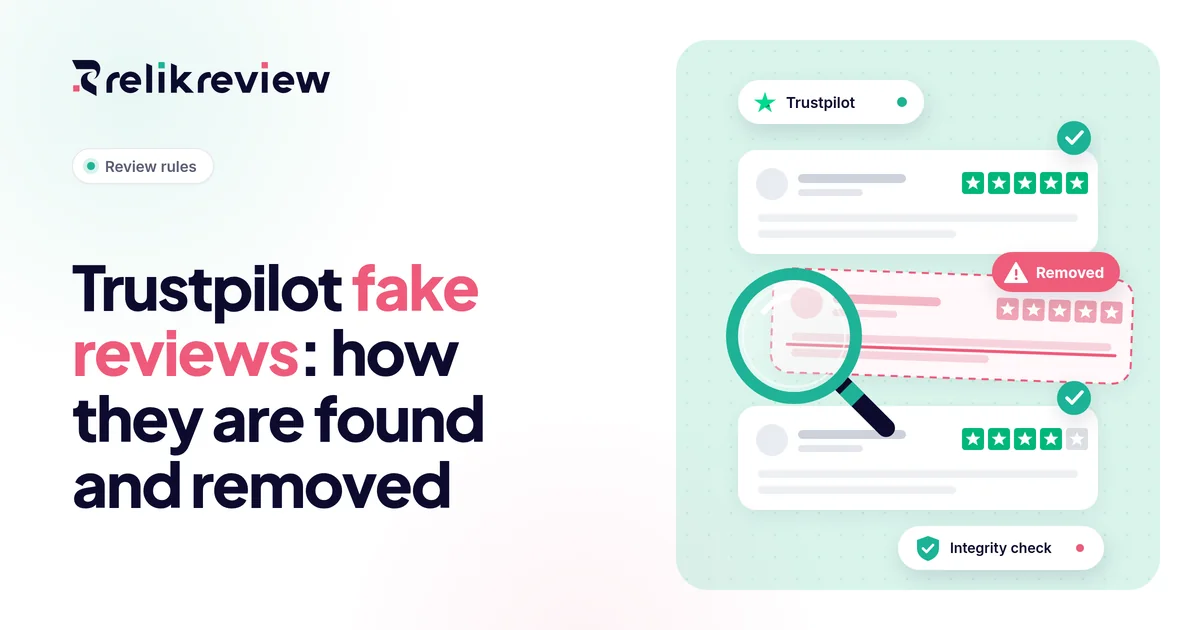
Trustpilot's guidelines for businesses (version 7.3, September 2026) let you flag a review from your business account or by contacting Trustpilot. For a review you think is fake, you can first ask the reviewer for their name, a reference number, an email or a phone number, which they may choose to share or not. If they do not answer, you can flag the review as not based on a genuine experience.
Flagged reviews stay visible during the investigation, apart from those flagged as harmful or illegal. Trustpilot also warns that flagging too quickly or for the wrong reasons is misuse, which can lead to account suspension or a Consumer Warning on your profile. Our guide to Trustpilot fake reviews explains how Trustpilot's own detection works alongside these flags.
Capterra
Capterra's community guidelines (last updated 4 May 2026) ask you to report a review by emailing [email protected] with a link to the product page, details about the review and any information that supports your request. A report starts an investigation but does not guarantee removal, and the review may stay visible while it is checked. Vendors must not abuse the flagging system, and reports made under false pretenses or to manipulate ratings may bring penalties.
Other review sites
SourceForge, SoftwareSuggest and HubSpot each set out their own reporting route in their review guidelines or terms. Read the current version on the platform's own site before you file, and follow the same pattern: one review per report, the rule it breaks and the facts you hold.
How to reply in public while a report is checked
Reply even while the report is open. The review may stay visible for days, and buyers who read it should see a calm answer from a named person underneath. The same BrightLocal survey found that 89% of consumers expect business owners to respond to reviews, so silence can look worse than the review itself.
Keep the reply short and factual: say you cannot find a matching account, correct any wrong facts and offer a named contact. If the review turns out to be genuine, that reply still reads well.
Here is a reply you can adapt:
Hi [name], thank you for taking the time to write. We have checked our records and cannot find an account, trial or support conversation that matches this review, and [Product] has never offered [the feature or plan mentioned]. If you are a customer and we have missed something, please email me at [email] so we can look into it properly.
[Name], [role] at [Product]
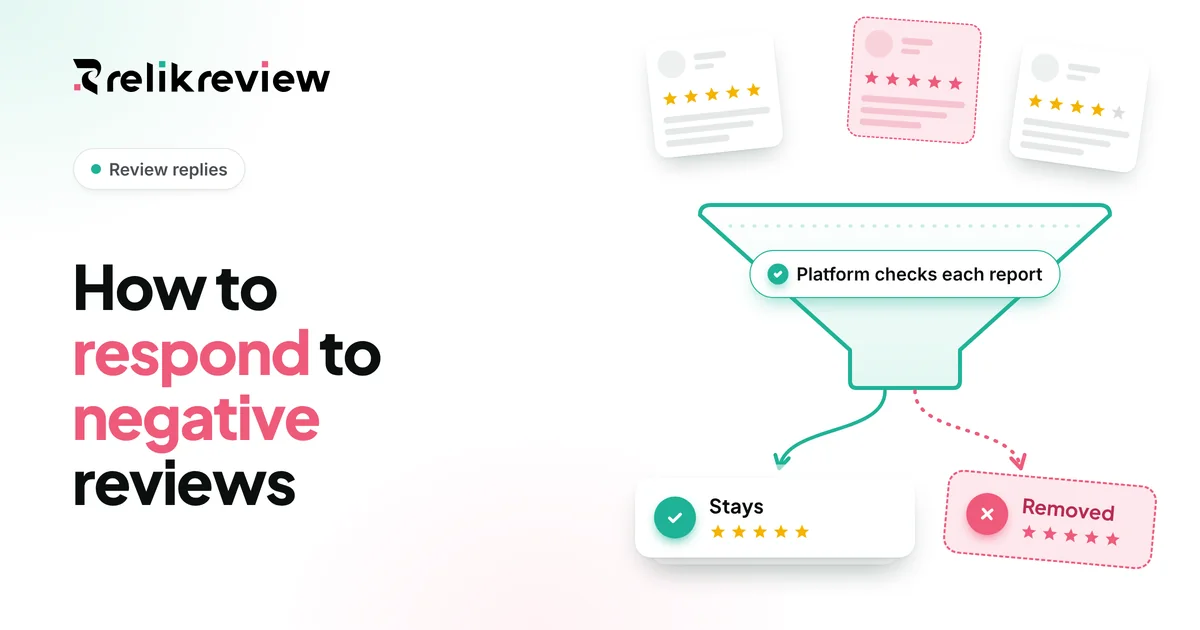
Never call the writer a liar or a competitor in public, and never try to track them down: G2's guidelines bar vendors from trying to identify or contact a reviewer to influence or pressure them. Our guide on how to respond to negative reviews has worked replies for the honest complaints you will also get.
Want recent reviews to outweigh a single fake one?
See how our review campaigns work, step by step, before you decide.
What the FTC rule says about fake one-star reviews
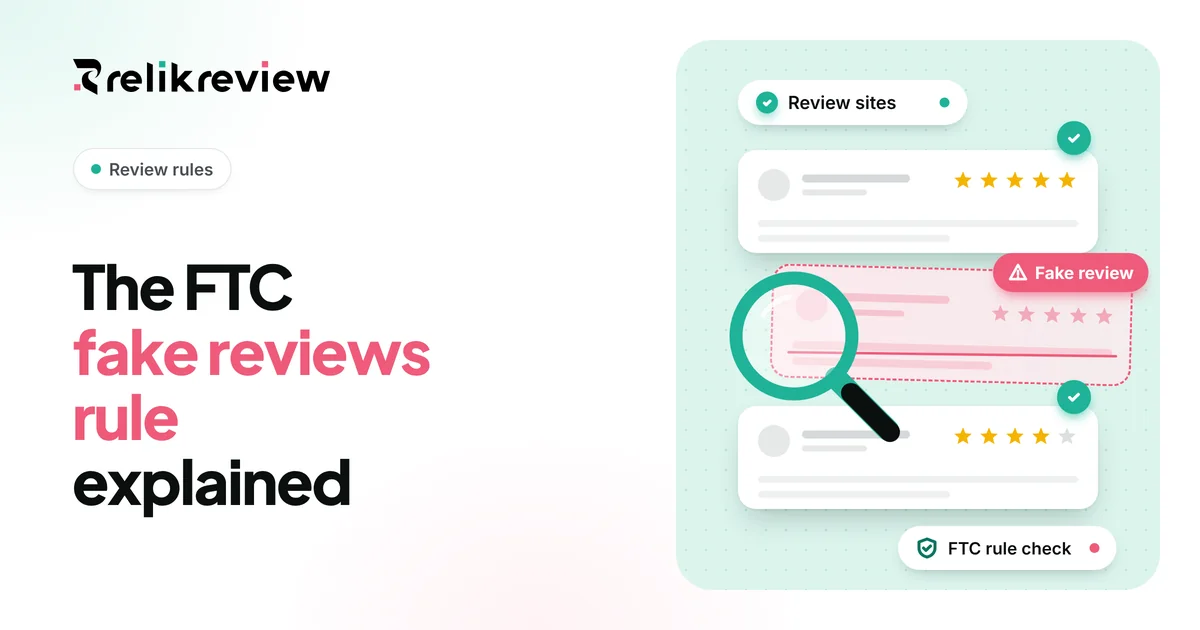
In the United States, the Consumer Reviews and Testimonials Rule has been in effect since 21 October 2024, and it reaches negative reviews as well as positive ones. The FTC's questions and answers on the reviews rule explain that its section on buying positive or negative reviews bans tying an incentive to a review that expresses a particular sentiment. Paying people to post one-star reviews of a competitor falls within that ban.
The rule also bans businesses from writing, creating or selling fake reviews, and it covers the other side of the dispute too. Its review suppression section bans groundless legal threats, intimidation and false accusations about a reviewer that a business knows to be false. A company that answers a genuine review by calling it fake can therefore break the rule itself.
The FTC says courts can impose civil penalties for knowing violations, but the rule gives no private right of action, so a business hit by fake reviews cannot sue under it directly. Our explainer on the FTC fake reviews rule covers every section in plain terms.
When to get legal advice about a fake review
This section is general information. It is not legal advice, and the law differs from place to place, so speak to a qualified lawyer about your own situation before you act.
For most teams, dealing with fake reviews starts and ends with the platform's own process. It is worth talking to a lawyer when:
- you hold evidence that links the reviews to a named competitor or person
- a review makes specific false statements of fact that could harm the business, beyond an opinion
- the attack carries on after your reports, or spreads to other channels
- someone asks for money to stop posting reviews or to take them down
- you are thinking of sending any legal demand to a reviewer, a rival or a platform
Bring your dated list of reviews, screenshots, reports and each platform's answer. The FTC rule's ban on groundless legal threats is one more reason to get advice before you send any letter.
Keep genuine reviews coming with RelikReview
A fake review does less harm on a profile full of recent, honest ones. RelikReview runs managed campaigns on six review sites, so you can buy SaaS reviews from reviewers who are never paid and choose their own rating.
- Verified users or your customersVerified users on G2 and Trustpilot, your customers on Capterra and HubSpot.
- An even monthly paceReviews arrive at a rhythm that suits each platform.
- The plan in writingYou see the plan and price before anything starts.
Fake negative reviews: report, reply and keep going
Fake negative reviews are frustrating, but the response is simple. Check each one against your records, report it with facts through the platform's own process, reply calmly in public and keep a dated record of every step.
Report only what truly breaks the rules, and let honest criticism stand with a good reply beneath it. If you would like a steady flow of genuine reviews so that a single fake one carries less weight, the RelikReview team is happy to talk it through with you.
FAQs about fake negative reviews
Can a fake review be removed from G2, Trustpilot or Capterra?
Yes, a fake review can be removed when the platform agrees that it breaks its guidelines, for example because the writer never used the product. You cannot delete it yourself. Report it through G2's Report a concern option, a Trustpilot flag or an email to Capterra's reviews team, with the facts that support your case.
How can you tell if a negative review is fake?
A negative review is likely fake when no customer record matches the writer, the details describe features or plans you never had, or it arrives in a burst of similar low ratings from new profiles. No single sign proves it, so look for several together and treat the review as honest when in doubt.
Is it illegal to post fake reviews about a competitor?
Yes, in the United States the FTC's Consumer Reviews and Testimonials Rule bans businesses from writing fake reviews and from paying for reviews that express a set sentiment, positive or negative. Courts can impose civil penalties for knowing violations. G2, Capterra and Trustpilot also bar competitors from reviewing a business at all.
Should you reply to a review you think is fake?
Yes, reply in public while your report is checked, because the review may stay visible in the meantime. Say that you cannot find a matching account, correct any wrong facts briefly and offer a named contact. Never accuse the writer of lying or working for a rival, since a genuine customer may have written it.
Can you report an honest negative review to get it taken down?
No, an honest negative review is never grounds for removal on G2, Trustpilot or Capterra. Trustpilot says disliking a star rating is no valid reason to flag, Capterra does not remove content over disagreements with opinions, and both warn that misusing reports can bring penalties. Answer honest criticism in public and fix the cause.