

 Addison Wilson

How to respond to negative reviews: the short answer
To respond to negative reviews well, reply within a few days, thank the reviewer, name their exact problem, own whatever part was yours, explain what you fixed or will fix, and give a named person to contact. Keep it short, calm and specific, and never argue, threaten or ask them to change their rating.
Every reply is written for two readers. The reviewer wants to feel heard and to get the problem solved, while the buyer who reads the page next month wants to see whether your team stays calm, tells the truth and follows through.
That second reader is the reason replies deserve care. A defensive reply can do more harm than the review itself, while a clear one shows the support a new customer can expect.
Where you can reply on G2, Trustpilot and Capterra
All three platforms let a company answer reviews in public, and all three encourage it. The details differ, so check what your account allows before you set up a reply routine:
| Platform | Reply feature | What the platform says |
|---|---|---|
| G2 | Public response under each review, on paid profiles | Responses show your name and organization, and you can edit or delete them later |
| Trustpilot | Public reply under each review | Keep replies polite and professional; replies with personal information, threats or aggressive language are removed |
| Capterra | Public vendor response under each review | Vendors are encouraged to respond to all reviews, whatever the rating |
G2's review activity documentation recommends responding to both positive and negative reviews, and notes that responding is not available on free profiles. Trustpilot's guidelines for businesses set the tone rules in the table, and Capterra's review verification FAQs encourage vendors to respond to all customer reviews, regardless of rating.
Replies handle the review in front of you, but volume decides how much one review weighs. A single two-star review hurts less when it sits among many recent, detailed reviews, which is what a steady review campaign adds. Teams that want help can increase G2 reviews or purchase Trustpilot reviews from verified users, or increase Capterra reviews with a campaign run with their own customers through Capterra's review link. Our software review services page compares every platform we cover.
Why responding to negative reviews matters to future buyers
Replies are read by far more people than the reviewer. BrightLocal's 2026 Local Consumer Review Survey of 1,002 US consumers found that 89% expect business owners to respond to reviews, and 80% are likely to use a business that responds to all of its reviews. Only 47% said the same of a business that responds only to negative reviews, so answering only critics can look selective.
The same survey found that 42% are unlikely to use a business that never replies, and that generic or templated replies put off 50% of consumers. The research covers local businesses, but software buyers read replies the same way, as a preview of the support they will get after they sign.

Speed matters too. BrightLocal found that 81% of consumers expect a response within a week, and 19% expect one on the same day. For a SaaS team, a sensible target is to answer every negative review within two working days, after you have checked the account and the facts.
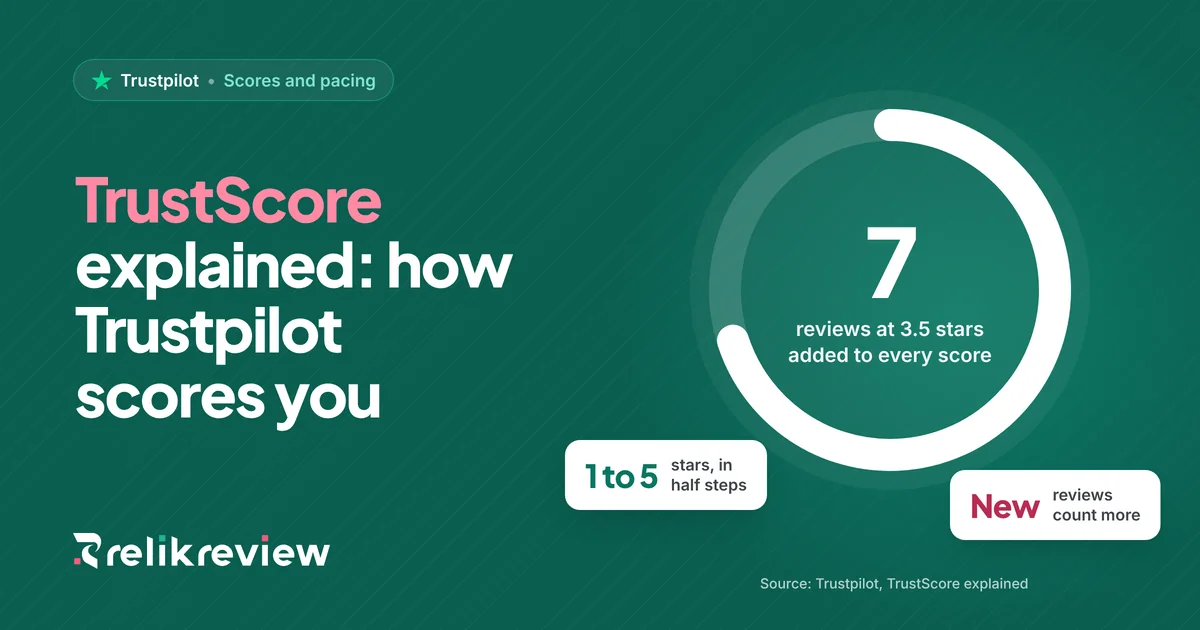
Replies are one part of a wider picture, which our guide to online reputation management for SaaS covers, from brand search to AI answers. On Trustpilot, a low rating also feeds your score, and our explainer on how TrustScore works shows how.
A calm structure for how to reply to a bad review
Most good replies make the same five moves in the same order. The structure keeps you steady when a review stings, and it makes sure every line tells the reader something useful:
- Thank them and use their name. One short line shows you read the review as a message from a person.
- Name the exact problem. Repeat the specific issue in your own words, so the reader sees you understood it.
- Own your part. Apologize plainly for what was in your control, without "if" or "any inconvenience".
- Say what changed or what happens next. Mention a fix that has shipped, a policy you updated or a next step you can keep.
- Give a named contact. Sign with a real name and role, and offer a direct way to continue.

Before you write, check the facts. Look up the account and read the ticket history, so your reply does not promise something that already failed once.
Keep the reply shorter than the review, which usually means three to five sentences. The person who answers should be able to fix the problem, such as a support lead, product manager or founder, and the same person should handle the follow-up if the reviewer gets in touch.
A shared document of approved phrases helps a team stay consistent, but every reply still needs the reviewer's specific problem in it. Half of the consumers in BrightLocal's survey are put off by generic responses, and a buyer can spot a pasted reply when the same three sentences appear under every review.
Negative review response examples for common SaaS complaints
The replies below are examples written for a made-up product called [Product], with placeholder names and details. Rewrite every line around the actual review, and only claim a fix that has shipped or a timeline you can keep.
If nothing has changed yet, say what you are looking into and when you will update the reviewer. A reply copied word for word reads as a template, so treat these as a starting point.
Example reply to a bug or outage complaint
The review says: "The sync broke twice last month and we lost a day of work." This reply confirms the problem and says what changed:
Hi Jordan, thank you for writing this, and I am sorry the sync failures cost your team a day of work. We traced both outages to a fault in our [integration] connector and shipped a fix on [date]. We now email customers while any sync is delayed. If you still see gaps in your data, please write to me at [email] and I will check your account myself.
Sam, Head of Support at [Product]
Example reply to a pricing complaint
The review says: "Good tool, but the price went up at renewal with very little warning." This reply separates the price decision from the way it was handled:
Hi Priya, thank you for the honest review, and you are right that our notice for the [month] price change was too short. The new price reflects [reason, such as added features or infrastructure costs], but the short notice was our mistake. We now give at least [number] days' notice before any change. If the new price does not fit your team, please contact me at [email] and we will look at the plan options together.
Lena, Customer Success Lead at [Product]
Example reply to a slow support complaint
The review says: "Support took four days to answer a simple question." This reply accepts the delay without making excuses:
Hi Marco, four days is far too long to wait for an answer, and I am sorry we let you down. Our team was short-staffed that week, which explains the delay but does not excuse it. We have since added [weekend cover or chat support] and now answer most tickets within [time]. If your question is still open, reply to ticket [number] or write to me directly at [email].
Dev, Support Manager at [Product]
Example reply to a churned user
The review says: "We left after a year because the reporting never did what we needed." This reply respects the decision and leaves the door open:
Hi Elena, thank you for sharing this after a year with us, and I am sorry the reporting did not meet your team's needs. Custom reports were a weak spot during your time with [Product], and we rebuilt them in [month] based on feedback like yours. If you ever want to see what changed, I am happy to show you at [email].
Tom, Product Manager at [Product]
Example reply to a review with wrong facts
The review says: "This app deletes your files without asking." No matching account or ticket exists. This reply corrects the record calmly and keeps the door open:
Hi Alex, we are sorry to read this, because lost files are serious. We could not find an account or support request that matches your review, and [Product] always [asks for confirmation] before a file is deleted. If this happened with our product, please contact me at [email] so we can look into it together.
Sam, Head of Support at [Product]
What not to say in a public reply
Most damaging replies come from a first draft written in anger. The safest habit is to write the reply, leave it for an hour and read it again as a buyer would before you post it.
These are the lines to keep out of every public reply:
- Arguments or accusations. Even when you are right, a public fight reads worse than the complaint, so state the facts once and stop.
- Account or personal details. Trustpilot removes replies that contain personal information, and G2's community guidelines bar vendors from disclosing personally identifying information about members of its community.
- Threats of any kind. The FTC's final rule on fake reviews bans unfounded or groundless legal threats, physical threats and intimidation used to prevent or remove a negative review.
- Requests to change the rating. Trustpilot says you should never pressure reviewers to edit a review, and G2 bars vendors from contacting a reviewer to influence, coerce or pressure them into changing it.
- Rewards for an edit. Trustpilot bans incentives connected with writing or editing reviews.
- Sales copy. A feature list or a discount code under a complaint looks like you skipped the problem.

Some reviews need extra care. If a review mentions a data breach, a contract dispute or a legal claim, keep the public answer short and factual, and involve the people who own that issue first.
When to take the conversation offline
Some problems cannot be solved in public. Move the conversation to email or a call when the fix needs account details, billing or refund information, security questions or a long back-and-forth that would fill the page.
Taking it offline should never feel like a brush-off. Answer the public part first, so readers see that you understood the problem, then give a named person and a direct email address instead of a general support line.
Let the reviewer decide whether to get in touch. Trustpilot notes that businesses can ask reviewers for more information about their experience, and that reviewers can choose whether to respond. G2's guidelines bar vendors from trying to identify or contact a reviewer to influence or pressure them about their review, so invite them and then wait.
When the issue is solved, a short public follow-up that thanks the reviewer for their patience can help. Trustpilot recommends that reviewers update a review if their opinion changes, but says businesses should never pressure them to do so, so leave any edit to the reviewer.
When you can report a negative review
Reporting is for reviews that break a platform's rules, and a low rating never qualifies on its own. G2's guidelines say it will never suppress or hide negative reviews and does not edit or remove reviews at a seller's request. Capterra says it does not modify content or remove an opinion or statement from a valid review.
Trustpilot gives the clearest list. Its guidelines accept a flag when a review:
- is harmful or illegal
- contains personal information
- is advertising or promotional
- is not based on a genuine experience
- is about a different business
Trustpilot adds that not liking a star rating or disagreeing with a negative review is no reason to flag it, and that it does not tolerate misuse of flagging. On G2, you report a concern from the review in your dashboard, and G2 says its moderation team reviews it within 2 business days. Capterra vendors find flagging instructions in their vendor portal, and anyone can email [email protected] with details.

Reply even when you report. A calm public answer protects you while the platform checks the review, and it still stands if the platform decides the review follows the rules. If you suspect a wave of fake reviews, our guide to Trustpilot fake reviews explains how they are found and removed.
Want your rating to rest on more than a handful of reviews?
See how our review campaigns work, from the written plan to steady monthly pacing.
Add recent reviews around the hard ones with RelikReview
A negative review weighs less among many recent, honest ones. RelikReview runs managed campaigns on six review sites through our software review services, paced steadily and within each platform's rules.
- Honest reviewersReviewers are never paid and choose their own rating.
- Six platformsG2, Trustpilot, Capterra, SourceForge, SoftwareSuggest and HubSpot.
- Steady pacingNew reviews arrive every month, without sudden spikes.
How to respond to negative reviews as a weekly routine
Learning how to respond to negative reviews comes down to one habit: read the review closely, check the facts, answer in public with a named person and fix the cause. Report only what truly breaks a platform's rules, and let the rest stand with your reply beneath it.
Put replies on a weekly calendar so no negative review waits more than a few days, and share the complaints that keep coming back with your product team. If you would like help adding recent reviews around the hard ones, the RelikReview team can talk through a plan with you.
FAQs about responding to negative reviews
Should you respond to every negative review?
Yes, respond to every negative review, including the ones you plan to report. BrightLocal's 2026 survey found that 80% of consumers are likely to use a business that responds to all of its reviews, against 47% for a business that answers only negative ones. Replying to good and bad reviews alike shows buyers a consistent habit.
How quickly should you reply to a negative review?
Reply to a negative review within a few working days, and sooner when you can. BrightLocal's 2026 survey found that 81% of consumers expect a response within a week and 19% expect one on the same day. Take a little time to check the facts first, because an accurate reply serves buyers better than a hasty one.
Can you ask a customer to change a negative review?
No, you should never pressure a customer to change a negative review. Trustpilot says businesses should never pressure reviewers to edit, and G2 bars vendors from contacting reviewers to influence or pressure them to change a review. Fix the problem, reply in public and leave the decision to update the review entirely to the customer.
Can G2, Trustpilot or Capterra remove a negative review?
No, a fair negative review is never removed because of its rating. G2 says it never hides negative reviews, Trustpilot says disliking a star rating is no reason to flag, and Capterra keeps the opinions in valid reviews. A review is removed only when it breaks the platform's guidelines, for example when it is fake.
What should a reply to a fake negative review say?
A reply to a suspected fake negative review should stay calm and factual. Say that you cannot find a matching account or ticket, explain briefly how the product really works and give a contact in case the reviewer is a genuine customer. Report the review to the platform separately, and never accuse the reviewer of lying in public.
How long should a reply to a negative review be?
A reply to a negative review should usually run three to five sentences, shorter than the review itself. That is enough to thank the reviewer, name the problem, own your part, say what changed and give a named contact. Longer replies tend to sound defensive, and many readers stop before they reach the useful part.