

 Addison Wilson

What is online reputation management for SaaS?
Online reputation management for SaaS means tracking what buyers see about your product on review sites, in search results, in AI answers and in community threads, then responding honestly. It covers replying to reviews, asking real customers for feedback, correcting outdated information and learning from complaints, without hiding criticism or paying to make it disappear.
For a local shop, reputation work often means a star rating on a map listing. For a software company the picture is wider, because buyers research across many sources before they ever speak to sales, and each member of a buying committee may check a different one.
The goal is a reputation that is accurate and current. Buyers should find recent, specific opinions from real users, a company that answers them and no outdated claims standing in for the truth.
Why online reputation matters for SaaS buyers
Software buyers do most of their research before they contact you. G2's 2025 buyer behavior research, a survey of 1,169 B2B decision makers, found that nearly 8 in 10 say AI search has changed how they research software, and 29% start their research on tools like ChatGPT more often than on Google. What those tools say about you depends on what is already written about you across the web.
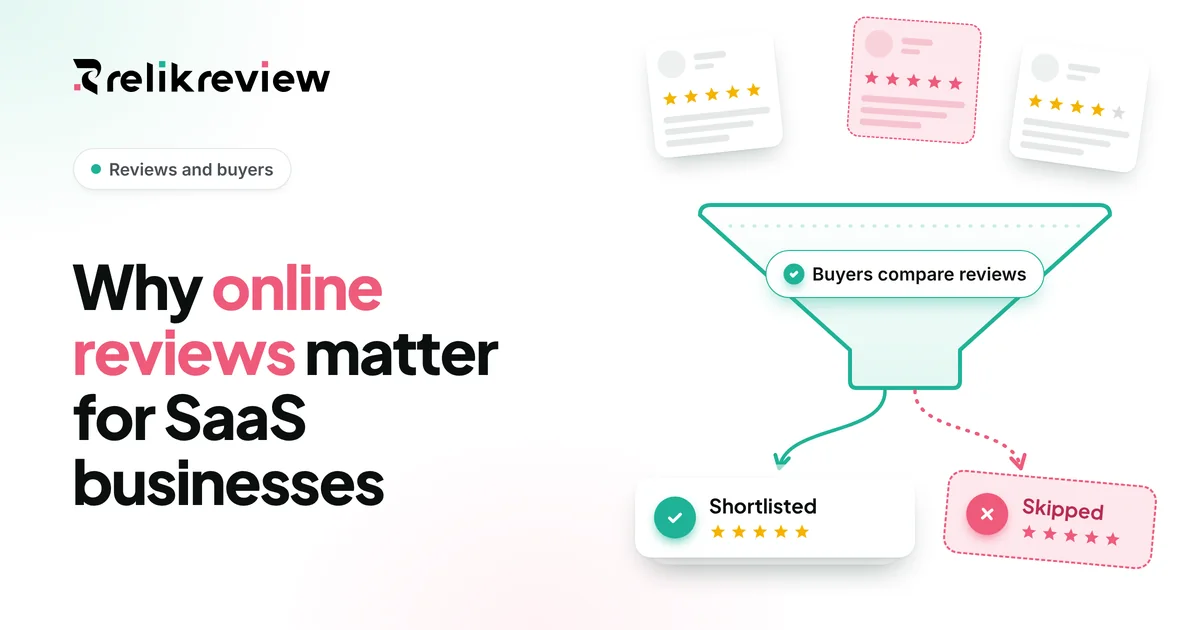
Reviews remain one of the sources buyers lean on most. The TrustRadius 2026 B2B Buying Disconnect report found that 74% of buyers use reviews to inform their purchase decisions, and 83% shortlisted three or fewer products. With a shortlist that short, a thin or outdated profile can rule you out before anyone asks for a demo.
The same report found that 63% of buyers used AI to research a software purchase, and 94% of those buyers fact-check its answers at least some of the time. TrustRadius also notes that AI recommendations are heavily shaped by third-party content such as customer reviews, independent publications and peer experiences. For the wider case, our guide on why are online reviews important covers what reviews do for trust, search and sales.
Where your SaaS brand reputation lives
A SaaS brand reputation is spread across four kinds of places, and buyers rarely check only one. Each place needs a slightly different kind of attention, so it helps to know what lives where.

Review sites
G2, Capterra, Trustpilot, SourceForge, SoftwareSuggest and the HubSpot App Marketplace are where buyers read detailed opinions from users. Your rating, the number of reviews, how recent they are and how you reply all shape the first impression.
Review sites are also the part of your reputation you can grow on purpose, by asking every customer in the same fair way and keeping a steady pace. Teams that want help can run a G2 review campaign, buy Trustpilot reviews for business or buy SoftwareSuggest reviews through managed campaigns with verified users, who are never paid and choose their own rating. Our page on software review services compares all six platforms we cover.
Brand search results
Type your product name into Google and read the first page as a buyer would. It often shows your site, your review profiles, comparison pages such as "alternatives" lists and sometimes a forum thread, and a buyer reads all of it as your reputation.
AI answers
Assistants such as ChatGPT, Gemini, Perplexity and Google's AI Overviews now summarise products for buyers. Their answers draw on public content, including review sites and discussions, so an old complaint or an outdated pricing page can show up in a summary long after you fixed the problem.
Community threads
Reddit, LinkedIn posts, Slack and Discord groups and niche forums carry the most candid opinions. A single thread asking for honest views of your product can rank in search and feed AI answers, so these conversations matter more than their size suggests.
How to monitor your online brand reputation
Monitoring your online brand reputation does not need an expensive tool to start. A short list of places, checked on a fixed schedule, catches most of what matters for a small SaaS team:
| Place | What to check | How to check it |
|---|---|---|
| Review sites | New reviews, rating trend, reviews without a reply | Each site's business or vendor dashboard and its notification emails |
| Brand search | The first page for your name, plus "reviews", "alternatives" and "vs" | A private browser window, once a month |
| AI answers | How assistants describe you and which sources they cite | Ask the same five buyer questions each month and save the answers |
| Community threads | New mentions and questions about your product | Saved searches on Reddit and LinkedIn, plus a free alert tool such as Google Alerts |
| Support and sales | Complaints that keep coming back | Help desk tags and notes from lost deals |
Keep the results in one shared sheet with a row for each month. The trend matters more than any single week, and a simple log shows whether your rating, review recency and AI descriptions are moving in the right direction.
Decide in advance who owns each channel. In a small team that is often one marketer for review sites, search and AI answers, with support and customer success passing on anything they hear from customers directly.
How reviews and replies shape your reputation
Reviews are the most visible part of a SaaS reputation, and your replies sit right beside them. A buyer reading a two-star review also reads how you answered it, so a calm and specific reply can do more for trust than the review did harm.
Buyers now expect those replies. BrightLocal's 2026 Local Consumer Review Survey found that 89% of consumers expect business owners to respond to reviews, and 80% are likely to use a business that responds to all of its reviews. It also found that 50% are put off by templated or generic responses, so copy-and-paste replies help less than you might think.

The survey covers local businesses, but the habit carries over to software, where buyers read a reply as a preview of the support they will get. Answer positive reviews with a short, personal thank-you, and answer negative ones with what happened, what you changed and how to reach you.
Platforms set the tone for replies as well. Trustpilot's guidelines for businesses encourage replies that answer customer questions and resolve issues, and ask businesses to keep them polite and professional. Replies that contain personal information, threats or aggressive language are removed.
Want to know how our campaigns keep reviews honest?
Read the RelikReview review policy, which covers unpaid reviewers, free choice of rating and each platform's rules.
What online reputation management can and cannot do
Honest reputation work changes how you respond and what new information exists about you. It cannot make a fair negative review disappear, and any service that promises to do so is either breaking platform rules or promising something it cannot deliver.
Review sites decide what stays up. Trustpilot's guidelines say it does not remove reviews just because a business thinks they are unfair or critical, and that not liking a star rating is not a valid reason to flag a review. You can report a review that truly breaks a platform's rules, such as one that contains personal information, and the platform makes the call.

Suppression can also break the law. In the United States, the FTC's final rule banning fake reviews prohibits unfounded legal threats, intimidation and certain false public accusations used to prevent or remove a negative review. It also bars a business from claiming that the reviews on its site represent all or most reviews when it has suppressed reviews based on rating or negative sentiment.
Fake reviews are the other trap. Our guide to Trustpilot fake reviews shows how they are found and removed, and why a profile built on them can lose far more than it gained.
A monthly online reputation management routine for SaaS teams
A small team can cover the basics in a few hours a month if the work follows the same order each time. The routine below splits it into four weekly blocks, so no single day carries the whole job.

Week 1: check
Run the monitoring list from the table above and update your sheet. Note new reviews, any change in rating, reviews without a reply, new threads and how AI assistants describe you this month.
Week 2: reply and fix
Reply to every new review, starting with the negative ones, and pass product problems to the team that owns them. Correct anything outdated that you control, such as pricing pages, feature lists and your profile details on each review site.
Week 3: ask for reviews
Send review requests to every customer who reached your fixed moment, such as 30 days after sign-up, in the same neutral way. If Trustpilot is one of your sites, our guide on how to get Trustpilot reviews covers invitations and timing.
Week 4: report and plan
Share a one-page summary with founders, product and support: what changed, what customers praised and what they keep raising. Pick one improvement for next month, because a complaint that stops appearing in new reviews is the best reputation fix there is.
Grow the review side of your reputation with RelikReview
Reviews are the part of your reputation you can grow on purpose. RelikReview runs campaigns on six review sites through our software review services, with steady pacing and each platform's rules built in.
- Six platformsG2, Trustpilot, Capterra, SourceForge, SoftwareSuggest and HubSpot.
- Honest reviewersReviewers are never paid and choose their own rating.
- Steady pacingNew reviews every month, with no sudden spikes.
Making online reputation management for SaaS a monthly habit
Online reputation management for SaaS comes down to knowing where buyers look, answering what they find and adding fresh, honest opinions over time. Review sites, brand search, AI answers and community threads all feed the same picture, and a monthly routine keeps it accurate.
You cannot delete criticism, but you can show buyers how you respond to it and make sure recent reviews reflect the product you sell today. If you would like help growing the review side, the RelikReview team can talk through a plan with you.
FAQs about SaaS online reputation
Can you remove negative reviews from G2 or Trustpilot?
No, a business cannot remove a fair negative review from a review site. Trustpilot says it does not remove reviews just because a business thinks they are unfair or critical. You can report a review that breaks a platform's rules, and the platform decides. For fair criticism, reply calmly in public and fix the cause.
Why does online reputation matter for SaaS companies?
Online reputation matters for SaaS companies because buyers research before they talk to sales. TrustRadius's 2026 research found that 74% of buyers use reviews to inform purchase decisions, and 83% shortlisted three or fewer products. What buyers read on review sites, in search and in AI answers decides whether you make that short list.
How often should a SaaS team check its online reputation?
A SaaS team should check its online reputation at least once a month and keep review alerts switched on in between. A monthly check of review sites, brand search, AI answers and community threads shows the trend, while alerts let you reply within a week, which 81% of consumers in BrightLocal's 2026 survey expect.
Should you reply to every review?
Yes, replying to every review is a good habit for a SaaS company. BrightLocal's 2026 survey found that 80% of consumers are likely to use a business that responds to all of its reviews. Keep replies short and personal, thank people for praise and answer criticism with what happened and what you changed.
Do AI assistants affect a SaaS brand's reputation?
Yes, AI assistants now shape how many buyers first hear about a SaaS brand. G2's 2025 research found that 29% of B2B buyers start research on tools like ChatGPT more often than on Google. Those answers draw on reviews, articles and community threads, so improving those sources is the most reliable way to improve what AI says.