

 Hazel Ryan

Is Trustpilot legit? The short answer
Yes, Trustpilot is a legitimate review platform. Anyone over 18 can review a business after a genuine, recent experience, every review passes automated checks before it is posted, and Trustpilot removed 7.8 million fake reviews in 2025. Its reviews are a useful signal of how customers feel, as long as you read a profile with care.
Legit does not mean perfect. Trustpilot is open by design, so the reviews on a profile come from whoever chooses to write one, and the figures on fake reviews come from Trustpilot itself. Those two facts explain both why the platform is useful and why it deserves a critical eye.
For founders, the answer matters for a different reason. If your buyers check Trustpilot before they sign up, the platform is legit in the way that counts most: people use it to decide, and what they find there shapes their first impression of your product.
How does Trustpilot work?
In Trustpilot's guidelines for reviewers, Trustpilot calls itself "open, independent, and impartial" and sets out who can write a review. In practice, a business does not have to sign up or agree for people to review it, and the same rules apply to every review whether the business pays Trustpilot or not.
Who can write a review
The guidelines set three simple conditions. A reviewer must be over 18 and must have had a genuine experience with the business, and that experience should be recent, which Trustpilot says typically means within the last 12 months. Each person is allowed only one user account.
Invited and organic reviews
Reviews reach Trustpilot in two ways. Trustpilot says "you can write a review at any time without being invited by a business," which is an organic review, and people can also write one when a business invites them, often after a purchase or a few weeks into a subscription.
The mix is worth noticing when you read a profile. A profile built mostly on invitations shows that the business asks for feedback as a habit, while organic reviews often come from people with something specific to say, good or bad. Reading both kinds gives a fuller picture than either alone.
Who creates profiles and how the score works
According to a 2024 Trustpilot article on how the platform works, consumers decide which businesses get reviewed, and a profile is created when someone searches for a business's web address. The same article says the TrustScore is calculated only from the 1 to 5 star ratings consumers give, with newer reviews weighted more heavily than older ones.
Trustpilot is free for consumers and businesses, and it earns its money from businesses that pay for extra tools such as review insights and marketing assets. It says paying subscribers must follow the same guidelines as everyone else, and its guidelines for reviewers add that "businesses have no control over review removal, whether or not they pay for our services", so a subscription cannot be used to take reviews down.
Want a profile buyers believe?
Buyers trust a profile with many recent, verified reviews, so that is what our work aims for when teams buy verified Trustpilot reviews from RelikReview, and we run review campaigns on other platforms such as G2 and Capterra under the same rules.
How Trustpilot checks reviews before and after they go live
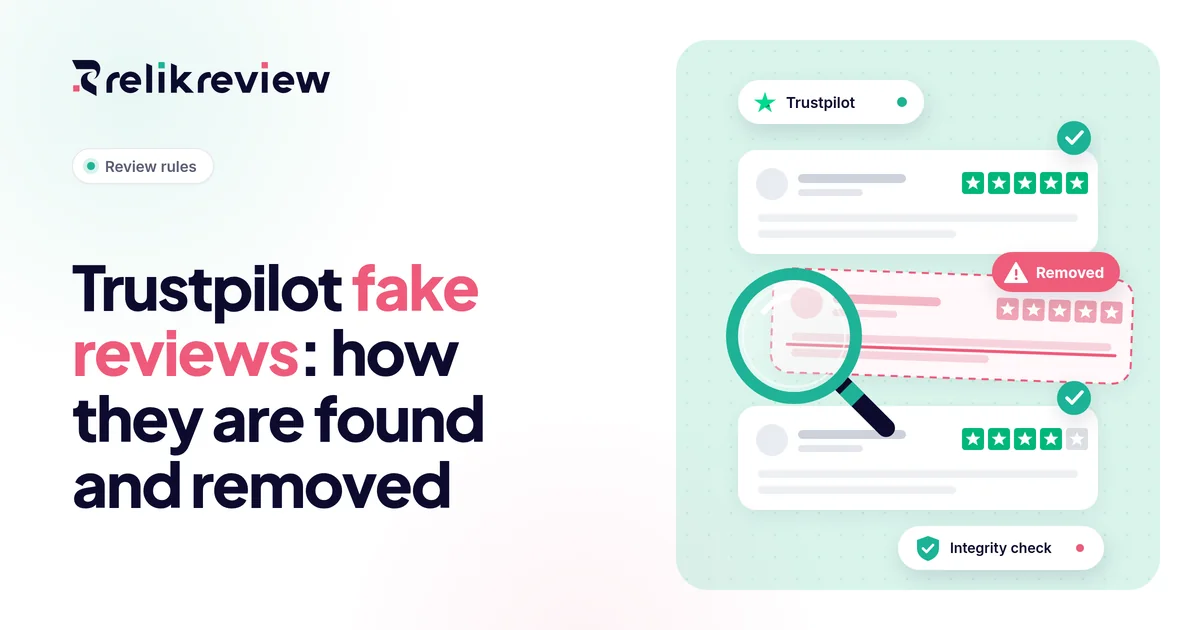
The first check happens before anyone sees a review. Trustpilot's guidelines for reviewers say: "We run all reviews through our automated detection software before posting them on our platform." Trustpilot says its detection models look for patterns in the metadata that describes each review, so it judges more than the words on the page.

After a review goes live, people add a second layer. Consumers and businesses can flag a review they believe breaks the guidelines, and Trustpilot then decides whether it stays up. Businesses may not use flags to target negative reviews, so an honest one-star review stays on the profile.
When a business misuses the platform, Trustpilot can go further than removing reviews. The action Trustpilot takes against misuse includes a Consumer Warning, which it describes as "a prominent notification explaining that the business has been misusing Trustpilot." The warning usually stays for six months, and the TrustScore is not shown to the public while it is active.
Trustpilot can also end a paid subscription, reduce the account to basic functions such as replying to and flagging reviews, and take legal action in serious cases. Our guide to Trustpilot fake reviews covers what counts as fake and how flagging works in more detail.
What Trustpilot's own numbers show
Trustpilot publishes figures on the reviews it removes each year. In Trustpilot's Trust Report 2025, published in May 2025, it said it removed 4.5 million fake reviews in 2024. That was 7.4% of all reviews submitted that year, up from 6.1% in 2023, and 90% of them were removed automatically.
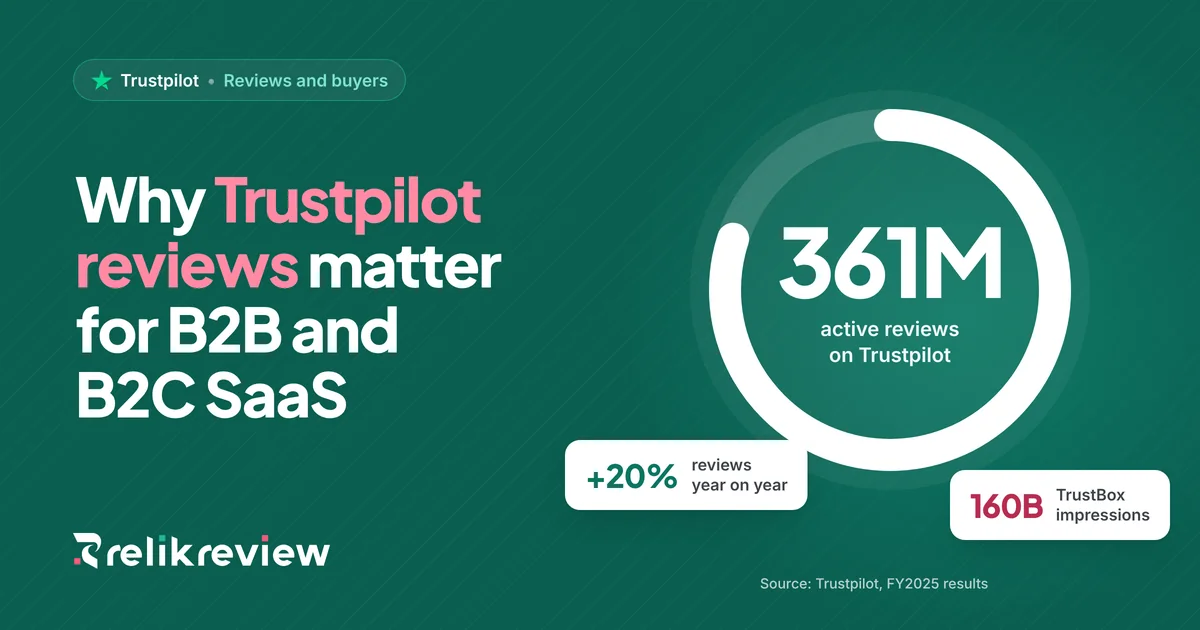
The figure grew again the next year. Trustpilot's results for 2025, published in March 2026, say it removed 7.8 million fake reviews during the year, with 91% identified and removed automatically. The same results put the platform at 361 million active reviews, up 20% on the year before.

These numbers cut both ways. A rising count of removed reviews shows the detection is catching more, and it also shows how many people try to game an open platform. The Trust Report also counted 92 thousand reviews flagged by consumers and 601 thousand flagged by businesses in 2024, so people still play a part next to the software.
Is Trustpilot reliable? The limits to know
Trustpilot is reliable as a broad signal, and a few limits shape what any single profile can tell you. None of them make the platform fake, and all of them are worth keeping in mind before you treat a score as the final word.
The figures are self-reported
The fake review numbers above come from Trustpilot's own reports. They describe the reviews Trustpilot caught, and no count can show the fake reviews that were never detected. That is true of every review platform, so read the figures as evidence of effort rather than a guarantee.
Ratings lean toward five stars
In the same 2024 article, Trustpilot cites its 2022 Transparency Report: 72.51% of reviews submitted were 5-star and only 13.56% were 1-star. People tend to write when they are very pleased or very unhappy, so a profile often shows many 5-star and 1-star reviews with fewer in between.
Review volume depends on the business
A business decides whether to invite customers at all, and how often. That means the number of reviews on a profile reflects how actively the business asks as much as how many customers it has, and a quiet profile says little about the product either way.
Can you trust Trustpilot reviews? How to judge a profile
You can trust Trustpilot reviews when you read the whole profile and treat the score as a starting point. A few minutes with the right checks tells you far more than the star rating at the top of the page.
Work through these checks on any profile:
- Look for a Consumer Warning. A warning banner means Trustpilot found misuse, and the TrustScore is hidden while it shows.
- Check how recent the reviews are. Steady reviews over recent months say more than a large pile of old ones.
- Read the 1 and 2 star reviews. They show the worst cases and what most often goes wrong.
- Read the replies. Calm, specific answers from the business show that someone is listening.
- Use the filters. Trustpilot lets you filter a profile by star rating, verified or replied-to reviews, timeframe, keywords and language.
- Open the company activity page. Trustpilot publishes it to show how each business uses the platform.

No single check settles the question, and one short review proves nothing on its own. The pattern across many reviews is what matters, which is also the approach Trustpilot's own software takes when it looks for fake reviews.
Want to see the rules we follow?
Our RelikReview review policy lists every rule our campaigns follow on Trustpilot and the other platforms we work on.
Is Trustpilot legit for SaaS founders?
For a founder, the better question is whether Trustpilot is worth the effort. It tends to matter most for B2C and prosumer software, where one person decides quickly and often checks a Trustpilot profile before starting a trial. For B2B tools bought through longer shortlists, Trustpilot is usually one source among several review sites.
If Trustpilot is part of your buyer's journey, the platform's rules work in your favor. Paying for Trustpilot's tools gives a business no control over which reviews are removed, and the TrustScore comes only from consumer star ratings, so the profiles that look good are usually the ones that ask customers consistently. Our guide on why Trustpilot reviews matter covers the buyer side, and how to get Trustpilot reviews sets out the invitation steps.
The main risk for a founder is a shortcut. Fake or incentivized reviews can lead to removed reviews and a Consumer Warning, which hides the TrustScore on the very page buyers check. A steady flow of honest reviews from real users is slower, and it is the kind that lasts.
 Trustpilot review service
Build a Trustpilot profile buyers trust with RelikReview
RelikReview plans and runs Trustpilot campaigns so you can buy verified Trustpilot reviews that follow every rule in this guide. You get the plan, pacing and price in writing before anything starts.
- Verified users, own wordsEach reviewer chooses their own rating.
- Never paidNo reviewer receives a reward for a review.
- Steady pacingReviews arrive at a natural pace with no sudden spikes.
So, is Trustpilot legit? The verdict
Is Trustpilot legit? Yes, it is an open review platform that checks every review with software, lets people flag problems and publishes what it removes. Its limits are real too: the figures are its own, ratings lean toward the extremes and no detection system catches everything.
Read a profile as a whole, with its recent reviews, its low ratings and its replies, and you will get an honest picture of most businesses. If you want your Trustpilot profile to pass that test, the RelikReview team is happy to talk through a plan that fits your product.
FAQs about whether Trustpilot is legit
Is Trustpilot a real company?
Yes, Trustpilot is a real company. It was founded in Denmark in 2007, is headquartered in Copenhagen and is run by Trustpilot Group plc, which publishes yearly financial results. Its platform held more than 361 million reviews at the end of 2025, and it is free for consumers and businesses to use.
Can businesses pay Trustpilot to remove bad reviews?
No, businesses cannot pay Trustpilot to remove bad reviews. Its guidelines for reviewers say businesses have no control over review removal, whether or not they pay for Trustpilot's services. Reviews come down only when they break the guidelines, and Trustpilot does not allow businesses to use flags to target negative reviews.
Who can write a review on Trustpilot?
Anyone over 18 who has had a recent, genuine experience with a business can write a review on Trustpilot. Recent typically means within the last 12 months. Reviewers can write without an invitation or after a business invites them, and each person may have only one user account on the platform.
How many fake reviews does Trustpilot remove?
Trustpilot removed 7.8 million fake reviews in 2025, according to its results for the year, and 91% of them were identified and removed automatically. In 2024 it removed 4.5 million fake reviews, which was 7.4% of all reviews submitted, and 90% of those were removed automatically.
Are all Trustpilot reviews verified?
No, Trustpilot reviews do not all carry a verified label, and you can filter a profile to show verified reviews if you want them. Every review, labeled or unlabeled, goes through Trustpilot's automated detection software before it is posted, and people can flag reviews that break the guidelines.