

 Addison Wilson

Do reviews help SEO? The short answer
Yes, but mostly indirectly. Google confirms that reviews help local ranking for businesses with a Business Profile, and review profiles on sites such as G2 and Trustpilot often appear when people search your brand. Google does not say that reviews or review widgets on your own site raise your rankings, and it limits stars for reviews a business controls.

The short version is that reviews earn most of their search value on other people's websites. Your profiles on review sites are pages that Google can rank, buyers can read and AI tools can cite, and the reviews on them are the content that makes those pages worth visiting.
Review pages ranking for your brand
Search your own product name followed by the word "reviews" and look at page one. In our practical view, most established SaaS brands will see their G2, Trustpilot or Capterra profile there, often next to their own website, and sometimes a marketplace listing as well. Try the same search for a competitor or two.
This matters because review pages ranking for your brand sit in front of buyers who are already close to a decision. Someone who types your name and "reviews" wants a second opinion, and whatever your profile shows, a recent stream of detailed reviews or a handful of old ones, becomes part of your brand search result.
You cannot control where a review site ranks, but you can control what the page holds. That is why many teams treat review building as part of brand search work. Some get G2 reviews and collect real Trustpilot reviews through managed campaigns with verified users, and HubSpot app makers buy HubSpot app reviews as a campaign run with their own customers through HubSpot's review link. You can compare every platform we cover on our page to buy business reviews, and in every campaign reviewers are never paid and choose their own rating.
How reviews affect SEO in Google's local results
The clearest statement Google makes about reviews and ranking is about local search. Google's tips to improve your local ranking name three factors: relevance, distance and prominence. Google says prominence is "also based on info like how many websites link to your business and how many reviews you have," and adds that "More reviews and positive ratings can help your business's local ranking."
The same page says replying to reviews shows customers that you value their feedback, and that positive reviews and helpful replies can help a business stand out. It also states that there is no way to request or pay for a better local ranking on Google, which rules out any shortcut sold as one.
Why many SaaS companies cannot use this
Local ranking only applies to businesses with a Business Profile, and that is where most software companies hit a wall. Google's business eligibility and ownership guidelines say "a business must make in-person contact with customers during its stated hours," and they list online-only businesses as ineligible.
A SaaS company that sells and supports its product online usually does not qualify, even if it has an office. In that case, local ranking advice does not apply to you, and your review effort is better spent on the software review sites your buyers use.
Review stars in Google results: what the rules allow
Many teams add a review widget to their homepage hoping for gold stars under their link in Google. Google's review snippet structured data guidelines, last updated in September 2026, set clear limits on this. If the entity being reviewed controls the reviews about itself, its pages that use LocalBusiness or any other type of Organization markup are "ineligible for star review feature," and Google says this includes reviews shown through an embedded third-party widget.
The same page asks for reviews that users can see on the marked-up page and ratings sourced directly from users. It also says that "Google does not guarantee that features that consume structured data will show up in search results," so correct markup is a request to Google and never a promise.
What this means for a software product page
For software, Google's software app structured data guide requires either an aggregateRating or a review property for an app to be eligible for its rich result. It also warns that sites breaking the guidelines may face manual action.
Our practical view is that star ratings are a display feature that may or may not appear, and none of the Google pages above describes them as a ranking factor. If you add markup, follow every rule and judge the work by click-through in Search Console.
How review sites support category and AI visibility
Brand searches are only half of the picture. Before buyers know your name, they search for a category, such as "best help desk software," and in our practical view review sites hold many of the first results for searches like these. Search your own category and you will often see G2, Capterra or a similar site above most vendors' own pages.
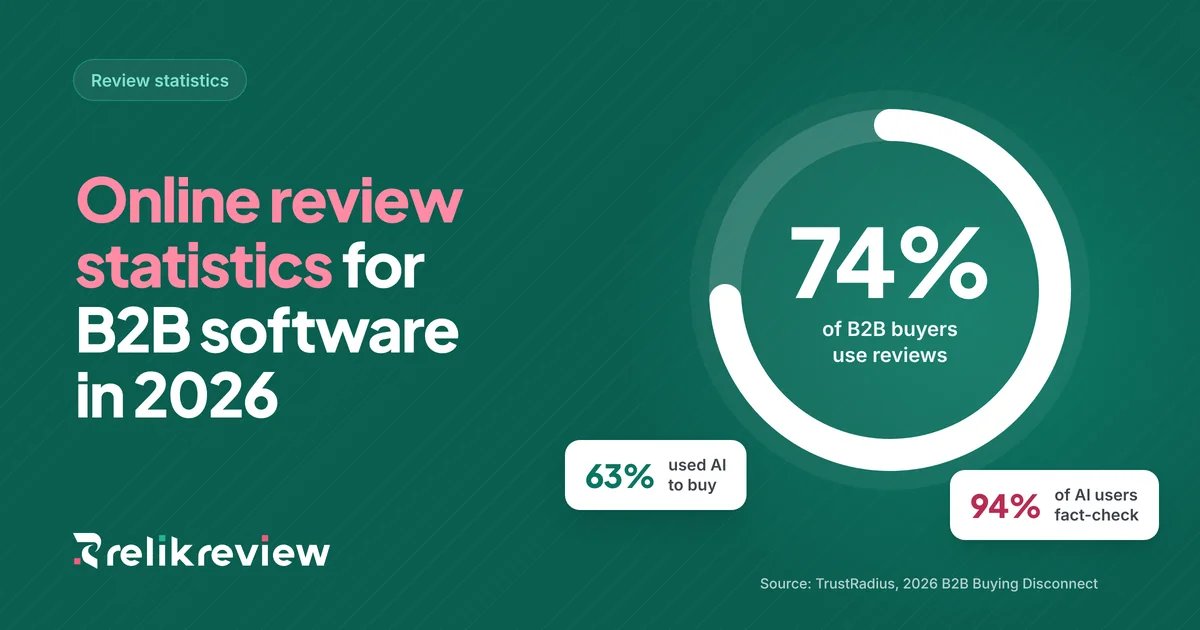
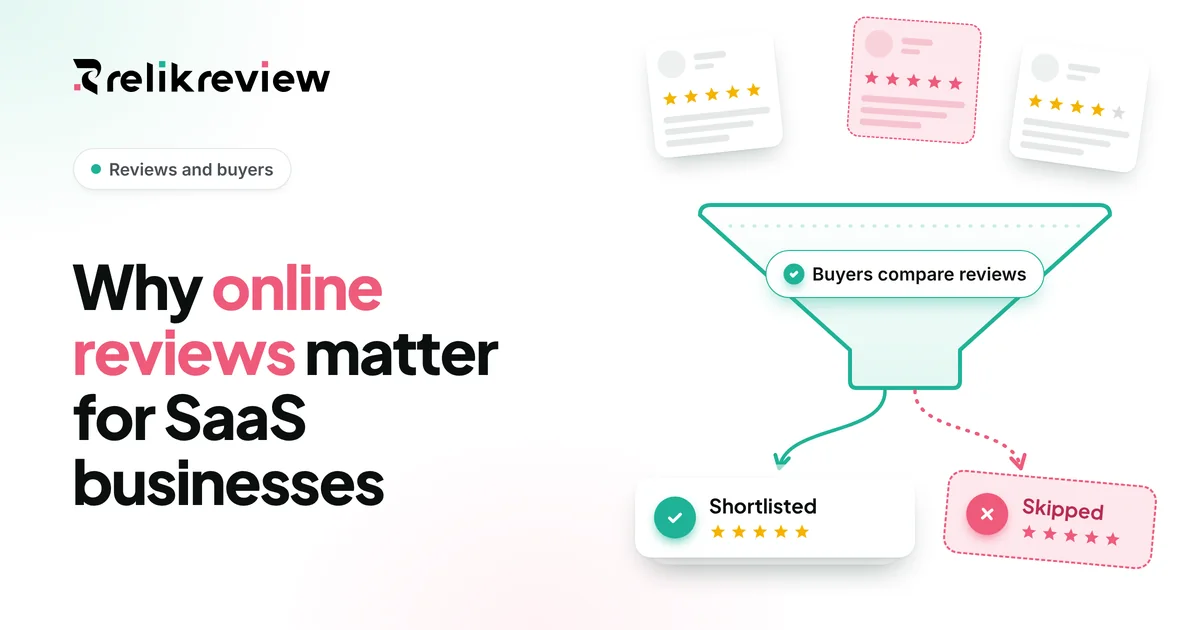
Buyers also lean on these sites when they decide who to consider. According to G2's 2026 Buyer Behavior research, based on more than 1,000 B2B software buyers, review sites at 38% "rose to be the top source shaping which vendors make a buyer's shortlist," passing AI chatbots at 37% for the first time. The same release says 82% of buyers sourced software recommendations from an AI chatbot in the last 24 months.

Those two numbers belong together, because AI tools often draw on the same review pages buyers read. We cover how that works in our guide to reviews in AI search. For SEO, the takeaway is that a profile with recent, detailed reviews earns visibility on pages you do not own, in both classic search and AI answers.
Fresh user content and trust
Reviews are user-generated content, and Google has a view on that kind of content. Google's guide to creating helpful, reliable, people-first content, updated in October 2026, lists "customer reviews" among the user-generated contributions that can form a page's main content "when they directly fulfill the page's purpose." On a review profile, that is exactly what they do.
The same guide explains E-E-A-T, the four qualities Google uses to judge whether content can be trusted, starting with first-hand experience. It says "trust is most important" and that E-E-A-T "itself isn't a specific ranking factor," though Google's systems use a mix of factors to find content that shows it well. Reviews written by people who have used a product are a clear example of first-hand experience.
Google does not say that new reviews raise a page's ranking, so we would not promise that. In our practical view, a steady flow of recent reviews keeps your profile current and useful for buyers, and gives review sites and AI tools fresh material to show.
Reviews and SEO myths to drop
A few claims about reviews and SEO come up again and again, and Google's own pages do not support them. Dropping them saves effort for the work that does help:
- "A review widget on our site will lift our rankings." Google does not confirm any ranking gain from widgets, and it rules out star snippets for reviews an organization controls about itself.
- "Review stars are a ranking factor." Google treats them as a search feature that is never guaranteed and does not describe them as a ranking signal.
- "More Google reviews will help every business." Only businesses eligible for a Business Profile gain from local prominence, and most online-only SaaS companies are not.
- "Any review is good for SEO." Fake or rule-breaking reviews put your profiles and your credibility at risk, and review sites can remove them.
The common thread is that reviews help search through the pages buyers read and trust. Treat them as evidence for buyers first, and the search value follows.
Want reviews that stay up?
Read the RelikReview review policy to see why every reviewer chooses their own rating and nobody is paid.
What to do: a reviews plan that helps search
The plan for a SaaS team is short, and none of it depends on tricks. Start with the pages that already rank for you, then make sure each one has a steady supply of honest reviews.

- Search your brand. Note which review pages appear for your name and for your name plus "reviews".
- Claim each profile. Correct your description, logo, category and website link on every site that ranks.
- Ask at fixed points. Invite every customer at moments they all reach, such as day 30, day 90 and each account anniversary.
- Reply to reviews. Thank reviewers and answer concerns, since replies are public and buyers read them.
- Skip the shortcuts. No fake reviews, no gating and no star markup that breaks Google's rules.
Measure the results where you can see them: brand search results, profile traffic reported by each review site and click-through in Search Console. For benchmarks on how buyers read reviews, see our roundup of online review statistics, and if you need to make the wider case to your team, our guide on why are online reviews important covers trust and conversion.
Build review profiles that buyers find with RelikReview
RelikReview runs review campaigns on G2, Trustpilot, Capterra, SourceForge, SoftwareSuggest and HubSpot, so the review pages buyers find hold steady, honest feedback. You get the plan and price in writing first.
- Six review sitesOne plan for every profile that ranks for your brand.
- Steady pacingNew reviews every month, with no sudden spikes.
- Every platform's rulesReviewers are never paid and choose their own rating.
Do reviews help SEO? The bottom line
So, do reviews help SEO for a software company? The only ranking effect Google states is in local search, which most online-only SaaS companies cannot use, and it limits stars for reviews you control. The larger benefit comes from review pages ranking for your brand and your category, where buyers and AI tools find and trust what customers say.
Build those profiles with honest reviews at a steady pace and the search value follows. If you would like help planning that work across the sites your buyers use, talk to the RelikReview team about where to start.
FAQs about reviews and SEO
Do reviews help SEO if a SaaS company has no Google Business Profile?
Yes, reviews still help in indirect ways. Without a Business Profile, a SaaS company gains nothing from Google's local ranking factors, but its profiles on G2, Trustpilot and Capterra can appear for brand and category searches. Recent, detailed reviews on those pages shape what buyers read before they visit your website.
Do review widgets on my website improve rankings?
No, Google does not confirm any ranking gain from review widgets. Its review snippet guidelines say that reviews an organization controls about itself, including those shown through an embedded third-party widget, are ineligible for star snippets on Organization or LocalBusiness pages. Widgets can still help visitors decide, so judge them by conversions.
Can a software product page show review stars in Google?
Yes, a software product page can be eligible, but stars are never guaranteed. Google's software app guide requires an aggregateRating or review property, and its review snippet rules require reviews that users can see on the page. Google can still choose not to show the stars, so treat them as a possible bonus.
Does replying to reviews help SEO?
Replying to reviews helps a business stand out, according to Google's Business Profile help, which says replies show you value feedback. Google does not call replies a ranking factor, though. On review sites, public replies also show buyers how your team handles problems and praise.