

 Addison Wilson

Why are online reviews important?
Online reviews are important because they give buyers proof from people like them. A review shows that real customers chose your product, used it and would say so in public. That proof lowers the risk of a purchase, helps your brand appear in search and AI answers, and gives your team honest feedback on what to fix.
For most buyers, reviews now sit near the start of the buying journey. Before they talk to sales, they compare products on review sites, check star ratings and read a few recent comments. If your profile is empty or out of date, many of them move on without telling you why.
Here is what online reviews do for a business:
- Build trust with buyers who have no other way to judge your product.
- Raise conversion rates on trial, demo and pricing pages.
- Improve visibility in Google results and in AI tools such as ChatGPT.
- Give product and support teams honest feedback from real users.
- Help sales, because buyers arrive already knowing what customers like.

What are online reviews, and where do SaaS buyers read them?
An online review is a public rating and written comment that a customer posts about a product or business. Most reviews combine a star rating with a short story of what the customer liked, what they did not like and who they would recommend the product to. Some sites, such as G2 and Capterra, also ask reviewers about their role, company size and how long they have used the product.
For software companies, reviews live on a handful of software review sites. B2B buyers build shortlists on G2 and Capterra, B2C and prosumer buyers often check Trustpilot, developers and IT buyers read SourceForge, small and mid-sized buyers use SoftwareSuggest, and HubSpot users check the HubSpot App Marketplace before they install an app.
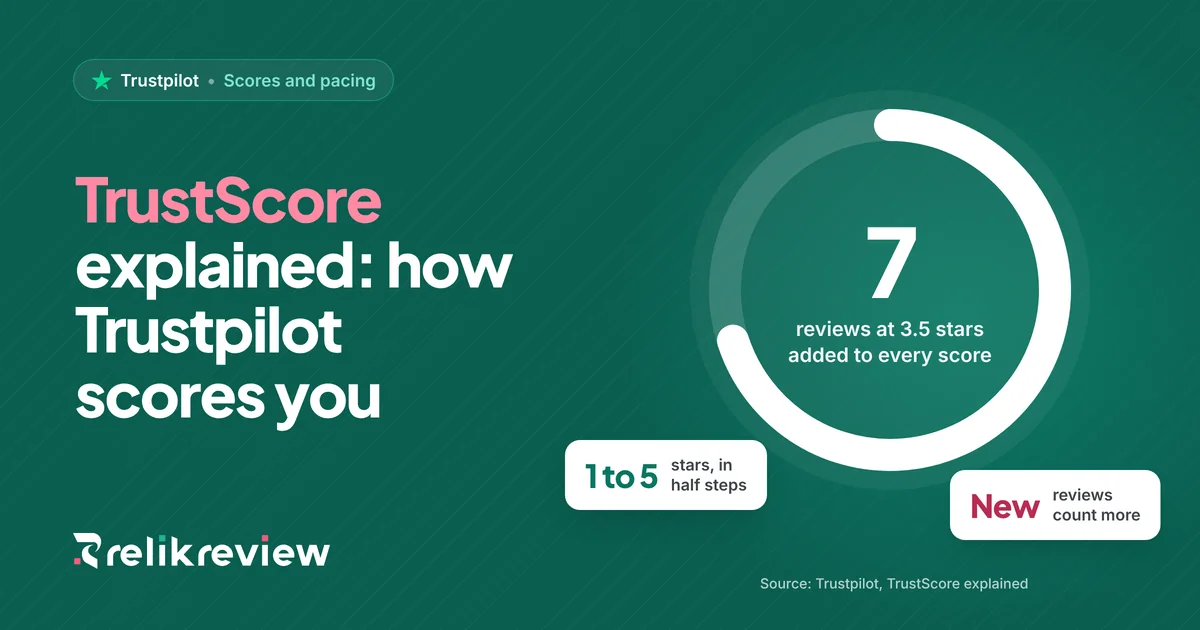
Each site checks and shows reviews in its own way. G2 places products on its Grid, Trustpilot turns reviews into a TrustScore, and Capterra shares reviews with GetApp and Software Advice, but on every site recent reviews from real users carry the most weight.
That is why most SaaS teams start with the one or two sites their buyers use first. A B2B tool might buy G2 reviews to move up the Grid, a consumer app might buy Trustpilot reviews to lift its TrustScore, and a developer tool might buy SourceForge reviews to reach IT buyers. In each case the reviews are written by real users in their own words.

The benefits of online reviews for trust and buying decisions
The biggest benefit of online reviews is trust. A review works like word of mouth at scale, because a stranger can read what dozens of real users think in a few minutes. This kind of social proof is hard to fake with ads or landing page copy, which is why buyers give it more weight.
Reviews lower the risk of a purchase
Every software purchase carries risk, because the buyer commits budget, data and team time before knowing whether the product will work. Reviews from people in a similar role or company size reduce that risk by showing what happened after other customers signed up.
BrightLocal's 2026 Local Consumer Review Survey found that 97% of consumers read reviews for local businesses, and 49% trust online reviews as much as personal recommendations from people they know. The survey covers local businesses, but the same habit carries over to software buyers, who are consumers in their personal lives too.
A few reviews change the result
You do not need thousands of reviews to see a difference. Research from the Spiegel Research Center at Northwestern University found that the purchase likelihood for a product with five reviews is 270% greater than for a product with no reviews. The effect was larger for higher-priced products, where conversion rose 380%, than for lower-priced products, where it rose 190%.
The same research found that the benefit of each new review starts to level off after the first five. That makes the first handful of reviews on every platform especially valuable, and it is one reason a new product should not launch with an empty profile.
A perfect 5.0 is not the goal
Buyers are wary of ratings that look too good. Spiegel found that purchase likelihood typically peaks for ratings between 4.0 and 4.7, so a mix of strong reviews with the odd honest complaint reads as more real than a perfect score.

How online reviews help you show up in search and AI answers
Online reviews also matter for visibility. When someone searches for your brand name, your G2, Trustpilot or Capterra profiles often appear on the first page next to your own site, showing your star rating and review count before the buyer clicks anything.
Reviews feed AI search tools
More buyers now start their research in AI tools. G2's 2025 Buyer Behavior Report, based on a survey of 1,169 B2B decision makers, found that nearly 8 in 10 say AI search has changed how they research software, and 29% start their research on tools like ChatGPT more often than on Google. BrightLocal's 2026 survey found that the share of consumers using generative AI tools for local recommendations rose from 6% to 45% in a year.
AI tools build their answers from published content, and review sites are a large part of it. When a buyer asks ChatGPT or Google's AI Overviews for the best tool in your category, recent reviews give those answers something to say about you.
Buyers still check the reviews themselves
AI has changed how buyers research, but it has not removed the need for proof. The TrustRadius 2026 B2B Buying Disconnect report found that 63% of buyers used AI to research a software purchase, and 94% of those buyers fact-check its answers at least some of the time. The same report found that 74% of buyers use reviews to inform their purchase decisions.
Reviews only help when they are real.
Every review in a RelikReview campaign is written by a real person who has used the product, in their own words, with no reward. Read the RelikReview review policy to see how each campaign is run, or see how to buy software reviews the right way.
Why reviews matter for SaaS companies in particular
Reviews matter for SaaS companies in a way they do not for many other businesses. Software buyers cannot touch the product before they buy, and many B2B buyers would rather finish their research before they speak to anyone. G2's 2025 research found that nearly two-thirds of buyers prefer to engage with vendor salespeople only in the later stages of their buying journey.
B2B SaaS: reviews do the selling before the first call
B2B software is usually chosen by a group. G2 found that smaller buying groups of 3 to 4 people are becoming more common in software decisions, and each person in that group may check reviews for a different reason. A finance lead looks for comments on pricing, an IT lead looks for comments on security and integrations, and the daily user looks for comments on ease of use.
A strong review profile answers all of those questions at once. It also helps your product reach shortlists, because G2 and Capterra use review data to place products in their categories and reports.
B2C and prosumer SaaS: reviews drive sign-ups
For B2C and prosumer apps, one person often makes the decision in a few minutes. That buyer checks the Trustpilot profile, glances at the TrustScore and reads two or three recent reviews. If those reviews are recent and specific, the sign-up happens, and if the profile is quiet, the buyer often tries a competitor. Our guide on how to get Trustpilot reviews covers the invitation rules that keep those reviews coming.
Want a steady flow of new reviews on the sites your buyers read?
See how our review campaigns work, from the written plan to the last review.
The importance of customer reviews inside your company
The importance of customer reviews goes beyond marketing. Reviews are one of the few places where customers explain, in their own words, why they bought, what they use most and what still frustrates them. That makes them useful for almost every team in a software company.
- Product teams can spot feature requests and points of friction that show up again and again.
- Support teams can find gaps in onboarding or help content before they turn into tickets.
- Sales teams can share relevant reviews with prospects who ask, "Who else like us uses this?"
- Marketing teams can use the exact words customers use in landing page copy, ads and emails.
- Leadership can track sentiment over time and catch early signs of churn.
Reviews also shape your wider online reputation, because the reviews, replies and ratings buyers see in search form their first impression of your company. A quiet or unanswered profile can cost you deals long before a buyer ever contacts your team.
What makes an online review profile convincing?
Not every review profile helps you. A profile with three reviews from 2022 can do more harm than good, because it suggests customers have stopped caring. Buyers look for a few clear signals before they trust what they read.
| Signal | What buyers look for | Why it matters |
|---|---|---|
| Recency | Reviews from the last few months | BrightLocal found 74% of consumers only care about reviews from the last three months |
| Volume | Enough reviews to see a pattern | Spiegel found the first five reviews make the biggest difference |
| Rating | A believable score, usually 4.0 to 4.7 | Purchase likelihood peaks in that range |
| Verification | A "verified" label from the platform | Spiegel found verified buyer badges improve the odds of purchase by 15% |
| Replies | Thoughtful answers from the company | BrightLocal found 80% are likely to use a business that responds to all of its reviews |
| Detail | Specific stories about real use | Detailed reviews answer questions that star ratings cannot |
The signal that is easiest to lose is recency. A profile that received 50 reviews two years ago and none since looks inactive, while a steady pace of new reviews every month keeps it current and avoids the sudden spikes that review sites watch for.

Do negative reviews hurt your business?
Negative reviews hurt less than most founders fear. A profile with only five-star reviews can look staged, and buyers often read the critical reviews first to see what the worst case looks like. A few honest complaints, answered well, can make your positive reviews more believable.
What does hurt is silence. A negative review with no reply suggests the company did not notice or did not care, while a calm, specific response shows future buyers how you treat customers when something goes wrong. For bugs, thank the reviewer and explain the fix; for pricing or support complaints, explain what you changed without arguing in public.
How to start building online reviews the right way
Getting reviews is simpler than most teams expect, but it has to follow each platform's rules. Here is a plan any SaaS team can start this month:
- Claim your profiles on the review sites your buyers use, and fill in every field, including screenshots, pricing and integrations.
- Pick one or two platforms to start. Most B2B products begin with G2 or Capterra, and most B2C products begin with Trustpilot.
- Ask every customer the same way, at a moment when they have just seen value, such as after onboarding or a successful renewal.
- Make it easy. Send one clear link to the review form and keep the request short.
- Follow each platform's rules on rewards. Some platforms run their own incentive programs, and others ban rewards entirely.
- Reply to reviews, good and bad, within a few days.
- Keep a steady pace. A few new reviews every month look natural and keep your profile recent.
Asking is the step most teams skip, so it is worth getting right. Our guide on how to ask customers for reviews includes scripts and timing for each platform.
Stay within the rules on fake reviews
Shortcuts carry real risk. In August 2024 the Federal Trade Commission announced a final rule banning fake reviews and testimonials. The rule covers reviews written by people with no real experience of the business, AI-generated reviews, payments tied to positive or negative sentiment and undisclosed insider reviews, and it lets the FTC seek civil penalties against knowing violators.
Review sites add their own checks on top of the law. Trustpilot, for example, removes reviews that break its guidelines and can place a warning on a company's profile, as our guide to Trustpilot fake reviews explains.
Need more reviews for your SaaS product? Let RelikReview run the campaign
RelikReview plans and runs review campaigns on six software review sites, so you can buy software reviews the right way. You get a written plan and the price before you pay anything.
- G2 and Capterra for B2B shortlistsReviews where teams compare products and build their shortlists.
- Trustpilot for B2C sign-upsRecent reviews on the page people check before they sign up.
- SourceForge, SoftwareSuggest and HubSpotReviews for developers, small business buyers and app marketplace users.
Why online reviews are important for long-term growth
So, why are online reviews important? They give buyers proof they cannot get anywhere else, they decide which products reach a shortlist, and they shape what search engines and AI tools say about your brand. They also give your own team a steady stream of honest feedback on what to build and fix next.
The benefits of online reviews grow when you treat them as an ongoing habit. Claim your profiles, ask every customer the same way, reply to what they write and keep a steady pace of new reviews on the sites your buyers read. If you would rather hand that work to a team that runs it every day, the RelikReview team can plan the campaign with you.
FAQs about online reviews
What are online reviews?
Online reviews are public ratings and written comments that customers post about a product or business on sites such as G2, Trustpilot, Capterra and Google. They usually combine a star rating with a short account of what the customer liked and disliked, and they help future buyers judge a product before they commit to it.
Why are online reviews important for a business?
Online reviews are important because they give buyers proof from real customers. They build trust, raise conversion rates on demo and pricing pages, help your brand appear in search results and AI answers, and give your team honest feedback. For software companies, they often decide which products reach a buyer's shortlist.
How do online reviews help SaaS companies?
Online reviews help SaaS companies by answering buyer questions before the first sales call. B2B buyers use G2 and Capterra to build shortlists, and B2C buyers check Trustpilot before they sign up. Recent, detailed reviews show how the product works for teams like theirs, which makes the decision feel less risky.
Do online reviews help SEO?
Yes, online reviews can help SEO for your brand. Review profiles on sites such as G2, Trustpilot and Capterra often rank on the first page for brand searches, showing your star rating before buyers reach your website. AI search tools also draw on review sites when they recommend software, so recent reviews help there too.
Are fake reviews illegal?
Yes, fake reviews are illegal in the United States under the FTC's final rule, announced in August 2024. The rule bans fake and AI-generated reviews, reviews from people with no real experience, and payments tied to positive or negative sentiment. Review sites such as Trustpilot and G2 also remove fake reviews and can penalize the businesses involved.
Should you respond to every online review?
Yes, responding to every online review is a good habit. BrightLocal's 2026 survey found that 80% of consumers are likely to use a business that responds to all of its reviews. Thank customers for positive reviews, and answer negative reviews calmly with what happened and what you changed, without arguing in public.