

 Addison Wilson

How to ask customers for reviews: the short answer
To ask customers for reviews, pick one fixed moment every customer reaches, send a short and neutral request with a single link to the review form, and follow up once. Ask every customer the same way, never only the happy ones, and never tie a reward to a positive rating.
The rest is detail, but the detail matters. The right moment depends on how long your product takes to show value, the right words depend on the channel, and the rules differ from one review site to the next.
Asking is also the part most teams skip. A busy team assumes that happy customers will review on their own, but most customers only think about a review when someone asks them for one.
Why asking for reviews works
Asking for reviews works because the request removes the two things that stop most customers: they forget, and they do not know where to go. A reminder with a direct link solves both, and it signals that you care about their opinion.
The habit is now common. BrightLocal's 2026 Local Consumer Review Survey found that 78% of consumers were asked to write a review in the last 12 months, and 28% said they will always write a review when asked, up from 16% in 2025. Customers expect to be asked, and more of them say yes.

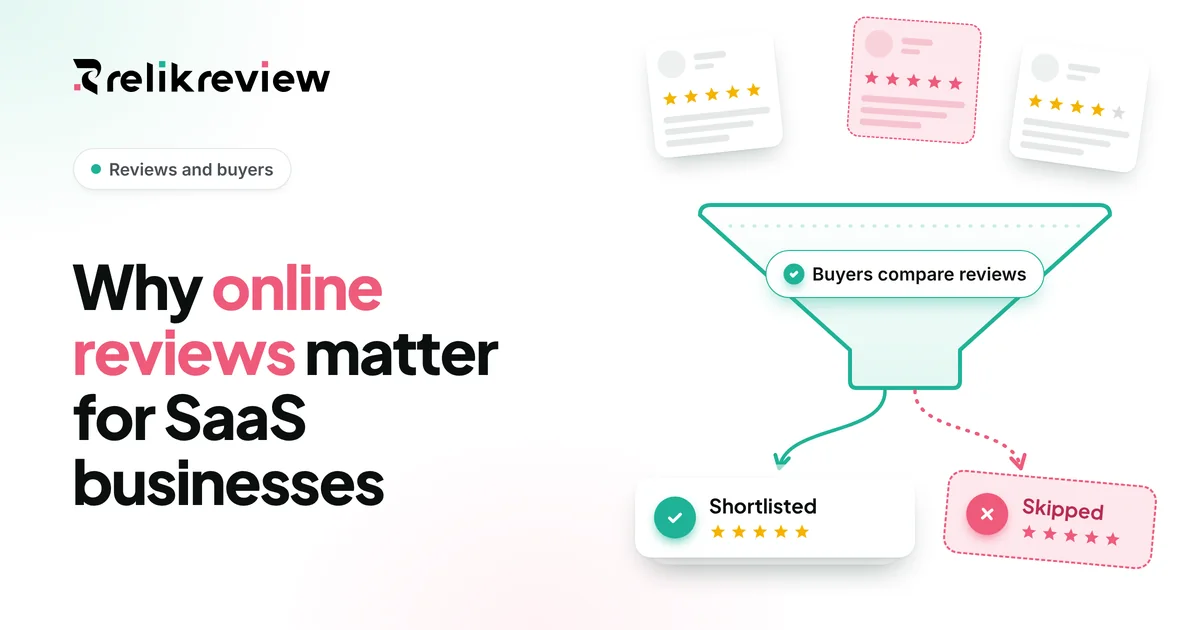
For software companies, the benefit compounds. Each new review adds to your rating, keeps your profile recent and gives the next buyer one more story from someone like them, which is why the teams with the strongest profiles are rarely the ones with the most customers.
The rules every review request must follow
Each review site sets its own rules on asking, and they are stricter than most teams expect. The safest approach is to build one process that passes the strictest rule on every site you use.

G2
G2's community guidelines encourage sellers to ask customers for honest reviews, but they ban any collection method that segments out potential negative reviews or only targets positive ones. G2 removes reviews when it finds a seller soliciting only positive reviews. Incentives are allowed only if they are never conditioned on a positive review, they are disclosed to G2, and their value stays at or below $100.
Capterra
Capterra's community guidelines, last updated in May 2026, ask vendors to request feedback from a broad cross-section of users and not to target users based on expected sentiment. Any incentive must be offered equally to all eligible reviewers regardless of rating, and vendors must use the incentive link from Capterra's vendor portal. Capterra, GetApp and Software Advice were acquired by G2 in early 2026.
Trustpilot
Trustpilot's guidelines for businesses are the strictest of the three. They require businesses to invite everyone in the same way and at the same point in the customer journey, and they ban incentives of any kind, including discounts, promo codes, prize draws and freebies. Our guide on how to get Trustpilot reviews covers the invitation tools and timing in detail.
The FTC
In the United States, the FTC's rule on consumer reviews took effect on 21 October 2024 and bans incentives conditioned on a positive or negative review. The FTC's guide for marketers on soliciting reviews adds plain advice: do not ask only customers you think will leave positive reviews, disclose any incentive and do not ask staff to review your business.
Teams that would rather hand this work to someone else have a few options. Some buy verified G2 reviews or buy verified Trustpilot reviews through a managed campaign with verified users, and others buy Capterra reviews as a campaign run with their own customers through Capterra's review link. You can compare every platform we cover on our page to buy SaaS reviews, and each campaign follows the rules described above.
When to ask customers for reviews
The best time to ask is after customers have used your product long enough to judge it, at a point every customer reaches. For most SaaS products, that is somewhere between 30 and 90 days after sign-up, once onboarding is done and the product is part of their weekly work.

Fixed points in time keep you inside every platform's rules. Trustpilot treats invitations timed so that only satisfied customers reach them as selective inviting, so avoid triggers such as an upgrade or a high NPS score. A date-based trigger, such as day 30 or an account anniversary, reaches happy and unhappy customers alike.
Pick one or two moments and stick to them. A fixed schedule also makes your review flow predictable, which helps you keep a steady pace of new reviews every month.
How to ask for a review: scripts you can copy
How to ask for a review depends on the channel, but every good request has the same three parts: a short reason, a direct link and no pressure on the rating. The scripts below follow that pattern, so swap in your product name and the review site you use.
Email request
An email reaches every customer and is the easiest request to automate. Keep the subject line plain and the body to a few lines:
Subject: How is [Product] working for you?
Hi [Name], you have been using [Product] for a month now, and we would value your honest view. Could you share your experience on [Site]? It takes about five minutes: [link]. Thank you for helping other teams decide.
In-app message
An in-app message catches customers while the product is in front of them. Show it to every active user at the same point, such as day 30, and let them dismiss it:
Got five minutes? Tell other teams what you think of [Product] on [Site]. [Write a review]
Customer success call
On a call, the ask can be personal without being pushy. Ask at the end of a regular check-in, then send the link in writing straight after:
Would you be open to sharing your honest experience on [Site]? Whatever you think helps other teams decide, and I will email you the link now.
One follow-up
Send one reminder about a week later, with the same link and no new pressure. If a customer does not reply after that, stop asking for that cycle.
How to ask clients for reviews in B2B SaaS
How to ask clients for reviews in B2B is a little different, because one account can have many users and the person who bought the product is often not the person who uses it most. Ask the daily users as well as the main contact, because their reviews describe how the product works in practice.
Customer success managers are usually best placed to ask, since they already talk to each account. Give them a shared template, a list of review links for each site and a simple way to record who has been asked, so no account gets three requests in a month and none gets forgotten.
Spread requests across the sites your buyers use. A B2B team might send G2 links to one group of accounts and Capterra links to the next, so both profiles grow steadily and no single site sees a sudden spike.
Want a steady flow of reviews without running the asking yourself?
See how our review campaigns work, from the written plan to the last review.
Mistakes to avoid when asking for reviews
Most problems with asking for reviews come from trying to control the result. Sending only your happiest customers to a review site, while routing unhappy ones to support, is called review gating, and G2, Capterra and Trustpilot all ban it. Asking for "five stars" or tying any reward to a positive rating breaks the same rules and the FTC's.
Other mistakes are about volume. Sending hundreds of requests in one week after months of silence creates a spike that review sites notice, while asking staff, friends or family to review your product creates reviews that are not based on genuine customer experience. Our guide to Trustpilot fake reviews shows what happens when reviews like these are found.
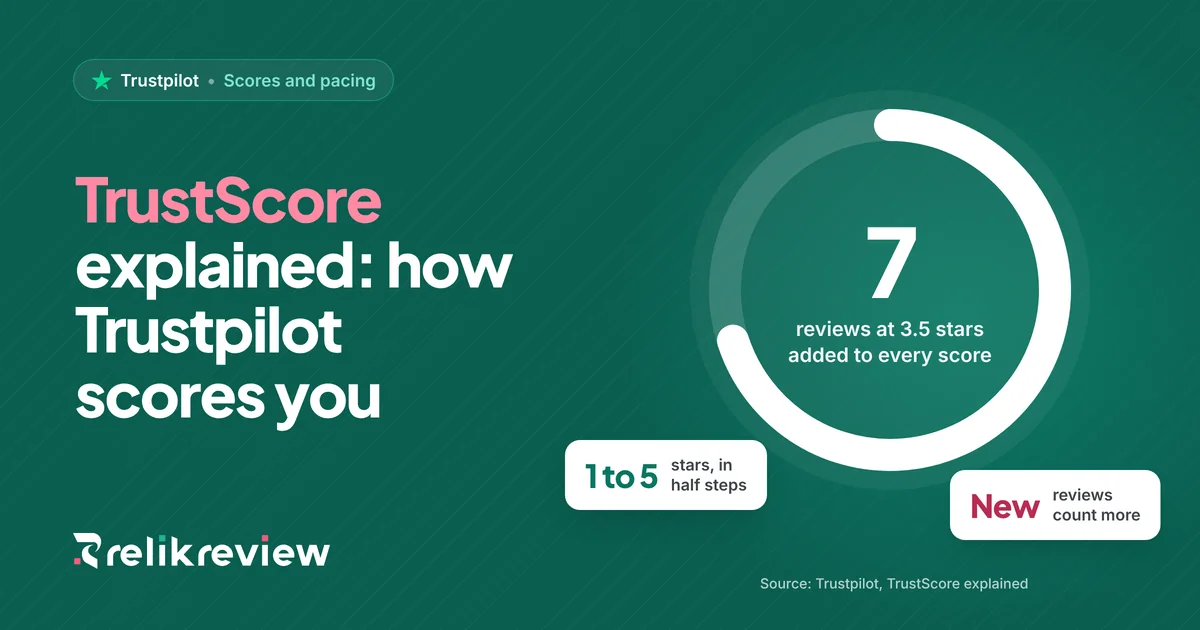
The fix is a steady, fair process. Recent reviews count for more on most sites, and our guide on how TrustScore works shows why a monthly rhythm beats a one-off push.
Need more reviews without the busywork? Let RelikReview do the asking
RelikReview runs review campaigns on six software review sites, so you can buy SaaS reviews that follow every rule in this guide. You get the plan and price in writing first.
- One process, every siteG2, Trustpilot, Capterra, SourceForge, SoftwareSuggest and HubSpot.
- Steady pacingNew reviews every month, with no sudden spikes.
- Every platform's rulesNo gating, and no rewards tied to ratings.
Making it a habit to ask for reviews
Learning how to ask customers for reviews is less about clever wording and more about consistency. Pick a fixed moment every customer reaches, send a short and neutral request with one link, follow up once and repeat the process every month.
Follow the strictest rule on every site you use and your profiles will grow with reviews that stay up. If you would rather hand that work to a team that runs it every day, the RelikReview team can plan a campaign with you.
FAQs about asking for reviews
Is it okay to ask customers for reviews?
Yes, it is okay to ask customers for reviews, and G2 openly encourages sellers to do it. Ask every customer the same way, keep the request neutral and do not ask for a particular rating. What breaks platform rules is asking only happy customers, offering rewards tied to a positive review or asking staff to review.
What is the best way to ask for a review?
The best way to ask for a review is a short email or in-app message with one direct link to the review form, sent at a fixed point such as 30 days after sign-up. Explain in one sentence why the review helps other buyers, send one reminder a week later and leave the rating to the customer.
Can you offer an incentive for a review?
Yes, you can offer an incentive for a review on some sites, but not all. G2 and Capterra allow incentives that are offered regardless of the rating and disclosed, and G2 caps them at $100. Trustpilot bans incentives completely. Under the FTC's rule, any incentive tied to a positive or negative review is illegal in the United States.
How do you ask clients for reviews in B2B?
To ask clients for reviews in B2B, have customer success managers ask at a regular check-in, then send the review link in writing. Ask daily users as well as the main contact, spread requests across the review sites your buyers use and keep a record so no account is asked too often.
How many times should you ask for a review?
Ask for a review twice at most in each cycle: one request and one reminder about a week later. More reminders rarely add reviews and can annoy customers. If someone does not reply, wait until the next fixed moment, such as their account anniversary, before asking again.